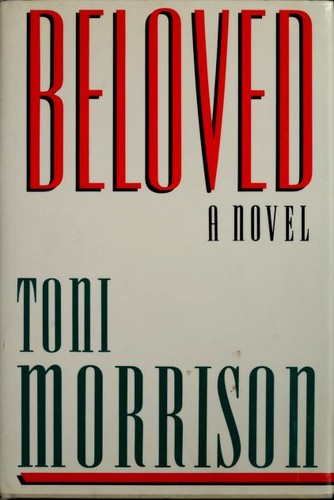
Beloved
Toni Morrison (1987)
“A ghost story about a mother who killed her baby daughter to spare her from slavery — and what happens when the dead come back.”
This page prints on a single page. Use Ctrl+P / Cmd+P.
Beloved
Toni Morrison (1987) · 324pages · Contemporary / American Gothic · 14 AP appearances
Summary
In post-Civil War Cincinnati, Sethe lives in a house haunted by the ghost of her dead infant daughter. When Paul D, a fellow survivor from Sweet Home plantation, arrives and drives the ghost out, Sethe begins to heal — until a young woman appears at the door calling herself Beloved, who may be the dead daughter made flesh. As Beloved's presence grows more consuming, the community and the past close in, forcing a final confrontation with the unspeakable act that defines Sethe's life.
Why It Matters
Beloved is the American novel about slavery — not a narrative of bondage written as adventure or pity, but an account of what slavery does to the interior life of those who survive it. It changed what was considered speakable in American literary fiction and what formal innovations were available...
Themes & Motifs
Diction & Style
Register: Literary with deep roots in African American vernacular — AAVE structures as primary grammar, not dialect deviation; prophetic and biblical cadences in Baby Suggs's speech; clinical distance for Schoolteacher's worldview
Narrator: Third-person limited with deep free-indirect penetration — the narrator moves in and out of characters' consciousness...
Figurative Language: Extremely high but differently deployed than the lyrical tradition (Fitzgerald, Keats). Morrison's metaphors are concrete and domestic: the tobacco tin, the chokecherry tree, the tree of hair in 124. Abstract emotional states are rendered in physical objects. This is not decorative metaphor but ontological
Historical Context
Post-Civil War Reconstruction America, 1865–1874 — with extended flashbacks to slavery-era antebellum period: Morrison is writing about Reconstruction — a period when formerly enslaved people were legally free but psychologically, economically, and structurally still subject to white violence. The novel in...
Key Characters
Talking Points
- Morrison opens with '124 was spiteful. Full of a baby's venom.' Why give the house a number instead of a name or description? What does the number do that a description couldn't?
- Sethe uses the word 'rememory' to describe how traumatic memories behave. Is rememory different from ordinary memory? What does the invented word accomplish that 'memory' alone couldn't?
- The act in the shed is held back until Part One, Chapter 16 — roughly halfway through the novel. Why does Morrison delay the central event for so long? What changes in your reading because you knew Sethe as a person before you knew what she did?
- Beloved's interior monologue in Part Two has no punctuation. Read it aloud. What does it feel like physically to read? What does the absence of periods and commas do that any other technique couldn't?
- Schoolteacher is never given a proper name and is always written in lowercase. What is Morrison claiming by denying him a name? Is this a reversal of slavery's logic, or something else?
Notable Quotes
“124 was spiteful. Full of a baby's venom.”
“Not a house in the country ain't packed to its rafters with some dead Negro's grief.”
“Definitions belonged to the definers — not the defined.”
Why Read This
Because every argument about whether historical trauma is 'over' runs directly into this novel and has no answer for it. Because the formal choices are inseparable from the meaning — you cannot understand what Morrison is saying without experienci...