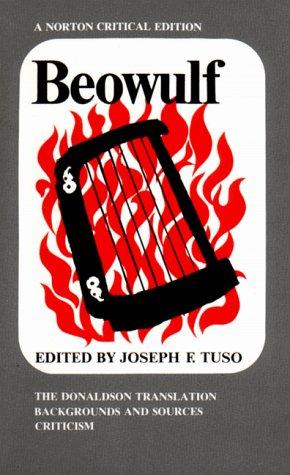
Beowulf
Anonymous (Old English poet) (1000)
“The oldest surviving epic poem in English — a warrior kills monsters, becomes king, fights a dragon, and dies asking whether any of it mattered.”
At a Glance
Beowulf, a young Geatish warrior, sails to Denmark to help King Hrothgar, whose mead-hall Heorot has been terrorized for twelve years by the monster Grendel. Beowulf kills Grendel with his bare hands, then dives into a cursed mere to slay Grendel's mother. He returns home a hero, eventually becomes king of the Geats, and rules wisely for fifty years. When a dragon threatens his kingdom, the aged Beowulf fights it and wins — but the dragon's venom kills him. His people burn his body on a great pyre and mourn, knowing that without him, their nation will fall.
Read full summary →Why This Book Matters
Beowulf is the oldest surviving long poem in English literature and the single most important text in Old English. It is the foundation of the English literary tradition — the starting point for any history of literature in English. Beyond its linguistic significance, it is a masterpiece of narrative structure, a profound meditation on mortality and the limits of heroism, and the text that influenced J.R.R. Tolkien so deeply that modern fantasy literature is inconceivable without it.
Diction Profile
Elevated, ceremonial, and alliterative — the poem is composed in Old English alliterative verse, where each line is divided by a caesura and bound by stressed syllables sharing initial consonants. Even in modern translation, the poem retains a gravity and formality unmatched in English literature.
Extremely high. The kenning is the poem's signature figure