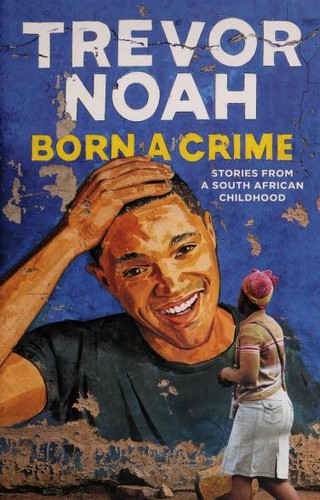
Essay Questions & Food for Thought
30questions designed to challenge assumptions and provoke original thinking. These can't be answered from a summary — you need the actual text.
Why is the book called 'Born a Crime'? The title has both literal and metaphorical meanings — identify both and explain which one Noah seems more interested in.
Noah argues that 'language brings you into a community more than appearance.' Do you agree? Find two moments in the memoir where speaking a language was more important than looking like the group, and two moments where it wasn't enough.
Patricia attends three different churches every Sunday. What is she actually doing — is this devotion, strategy, or both? Use specific textual evidence.
Noah says apartheid was 'the most sophisticated racial system ever devised.' What made it sophisticated? Use specific details from the memoir — the pencil test, pass books, racial categories, the Immorality Act.
Compare how Noah writes about his mother Patricia versus his stepfather Abel. Both are charming and funny — how does Noah signal, through prose, that one is safe and one is dangerous?
The chapter 'Fufi' is ostensibly about a dog. What is it actually about? Why does Noah place it where he does in the memoir's structure?
Noah describes being the 'chameleon' — able to pass between racial groups — as both power and loneliness. Can you think of a modern equivalent? Who in contemporary American life occupies a similar position?
Apartheid ended legally in 1994, but Born a Crime suggests that its social and economic effects persisted. What specific details from Noah's post-1994 childhood support this claim?
Noah writes that his mother 'had the audacity to go to church every single Sunday' even while hiding from police. What does 'audacity' mean here — admiration or irony? Or both?
Patricia refuses to be sorted by any racial category — she attends white churches, Black churches, and mixed churches; she forms relationships across racial lines. Is this inspiring, reckless, or both? Does the memoir take a position?
The memoir is structured as thematic chapters rather than strict chronology. Pick two chapters that feel out of chronological order and argue for why Noah placed them where he did.
Noah describes Abel as someone who 'used comedy the same way I did.' What does it mean when the tools of connection and survival — humor, charm, language — are also the tools of manipulation and control?
How does the specific racial category 'colored' in South Africa differ from its use in American English? Why does Noah take time to explain this difference — what does it reveal about how race is constructed differently in different countries?
Noah says his mother made deliberate choices that many people would call reckless — having a mixed-race child under apartheid, attending white churches, refusing to hide her identity. Was she brave, reckless, or was the distinction meaningless under the circumstances?
'God sees everything.' George Wilson says this about a billboard in The Great Gatsby. Koko says something similar about God in Born a Crime. Compare how these two texts use faith as a response to a system that seems to have no moral authority.
The memoir is told in English but is saturated with Zulu, Xhosa, Afrikaans, and other languages. For readers who speak none of these languages, what is the effect of encountering untranslated words? Why might Noah choose not to translate everything?
Patricia was shot in the head and survived. The memoir describes her recovery in terms of jokes rather than tears. Is this a coping mechanism, a characterization choice, or a moral statement about how to survive violence?
Noah describes his childhood hustle — selling pirated CDs, running informal businesses — as the natural consequence of his mother's 'loopholes' philosophy. Is this an endorsement of rule-bending, a critique, or a neutral description? Does the memoir take a moral position?
If Born a Crime were told from Patricia's perspective instead of Trevor's, how would it be different? What would we gain? What would we lose?
Noah connects his inability to belong to any single racial group with a loneliness that persisted even after apartheid ended. Is belonging to a specific community a human need, or is the freedom of not belonging actually preferable? Use the memoir as your evidence.
Apartheid used the 'pencil test' to determine race. What are the modern equivalents? How do contemporary systems categorize people by race, and are they more or less sophisticated than the pencil test?
The memoir opens with the taxi incident and closes with Patricia's shooting. Both involve violence against Patricia; both times she survives. How does Noah use these structural bookends, and what argument does the structure make?
Noah argues that poverty in South Africa was a 'mental prison' as well as a physical one — people couldn't imagine what they hadn't seen. Do you think this is true of all poverty, or specific to apartheid conditions?
The memoir contains graphic descriptions of domestic violence in the final chapters. Why do you think Noah chose to include these scenes in a book primarily known for its comedy? What would be lost if he hadn't?
Compare how identity is performed in Born a Crime versus The Great Gatsby. Both feature characters who construct their identities deliberately — Gatsby as Jay Gatz reinvented, Trevor as the linguistic chameleon. What makes their performances similar and different?
Noah describes post-apartheid South Africa as a place where 'the laws changed but the world the laws built didn't.' What does this mean concretely? Can you think of a parallel in American history where a legal change didn't immediately change social reality?
Robert Noah, Trevor's Swiss father, is largely a figure of absence. Is he a sympathetic character? Is he responsible for Trevor's fatherlessness, or is the system responsible? Does the memoir let him off the hook?
Born a Crime was published as a memoir but reads in places like a novel — with scene-setting, dialogue, pacing, and character development. Where does Noah use fictional techniques in service of memoir? Is this a strength or a problem?
The memoir's most recurring motif is people refusing to be what the system tells them they are. Identify three characters who do this — and identify one character who does not. What determines whether someone can resist their assigned category?
Trevor Noah is now one of the most famous comedians in the world. Does knowing how the story ends change how you read the memoir? Is Born a Crime a success story, and does it need to be one to matter?