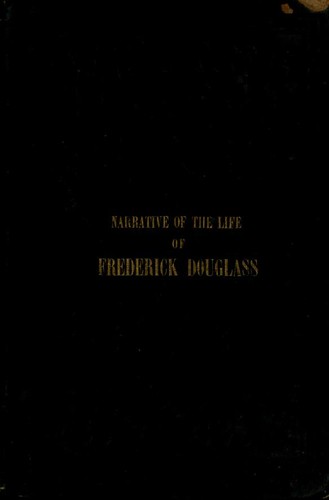
Narrative of the Life of Frederick Douglass
Frederick Douglass (1845)
“The man who escaped slavery and became America's most powerful orator — written in the language of his enslavers, wielded like a weapon.”
For Students
Because a man who was legally property wrote prose that outclasses most of his century, and that fact IS the argument. Because every line of this book is doing two things simultaneously: telling you what happened AND proving that the person telling you should not have been enslaved. Because it's short, structurally perfect, and makes you confront the gap between what America said it believed and what it actually did — a gap that did not close in 1865. Because Douglass is the best argument for education as liberation ever written by someone who had to steal that education to survive.
For Teachers
The Narrative is uniquely teachable at every level. At the literal level, it's a gripping escape narrative with real characters and real stakes. At the analytical level, it's a masterclass in rhetoric — argument structure, evidence deployment, irony, pathos. At the historical level, it documents the mechanisms of a system that shaped American politics for 200 years. The Appendix alone can anchor a full week of close reading. And at 125 pages, you can teach it completely.
Why It Still Matters
The argument that literacy enables freedom and ignorance enables control did not expire in 1865. Every debate about what books belong in school libraries, what history gets taught in classrooms, and whose perspective counts as legitimate knowledge is a continuation of the argument Hugh Auld made when he forbade Sophia to teach Douglass to read. The mechanism is exactly the same. Douglass named it first.