This page prints on a single page. Use Ctrl+P / Cmd+P.
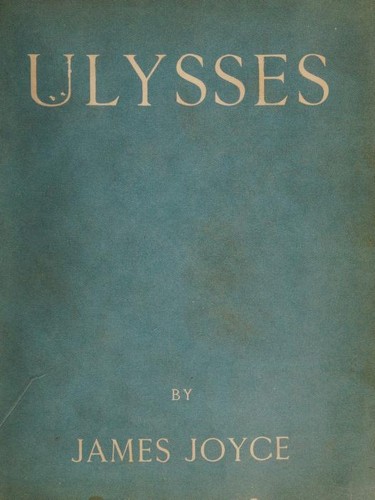
Ulysses
James Joyce (1922) · 730pages · Modernist · 9 AP appearances
Summary
On June 16, 1904, in Dublin, Leopold Bloom — a middle-aged Jewish advertising canvasser — spends an ordinary day navigating the city, grieving his dead son, and avoiding the fact that his wife Molly is about to sleep with her tour manager. Simultaneously, young Stephen Dedalus wanders Dublin wrestling with guilt over his mother's death and his artistic ambitions. Their paths cross briefly at night, and the novel ends with Molly Bloom's unpunctuated 'yes'-ending monologue. Every episode mirrors one from Homer's Odyssey. Almost nothing happens. Everything happens.
Why It Matters
Ulysses is the novel that redefined what a novel could be. Its initial publication as a complete book in Paris in 1922 was simultaneously a literary event and an obscenity case. It was banned in the United States until a landmark 1933 court decision (United States v. One Book Called Ulysses) that...
Themes & Motifs
Diction & Style
Register: Impossible to assign a single register — each episode deploys a different formal system, from colloquial stream of consciousness to academic catechism to unpunctuated monologue
Narrator: Ulysses has no single narrator. Episodes cycle through: third-person limited (tracking Bloom and Stephen), first-pers...
Figurative Language: Variable by episode. Metaphor density is highest in the Telemachiad (Stephen's poetic mind) and lowest in Ithaca (the catechism deliberately refuses metaphor). Joyce's most characteristic figure is the unexpected compound noun
Historical Context
Dublin, 1904 — Irish Literary Revival, British rule, early Modernism: The Irish Question is the political backdrop Bloom navigates as a Jewish Irishman — neither fully inside Irish Catholic identity nor outside it. The Citizen's nationalism represents the version of ...
Key Characters
Talking Points
- Joyce assigned each episode a corresponding episode from the Odyssey — but he never included these correspondences in the published text. Why? What would be gained or lost by making the parallels explicit?
- Bloom thinks in complete, digressive sentences; Stephen thinks in dense philosophical fragments; Molly thinks in long unpunctuated waves. How does Joyce use syntax to create character? What does each thinking style reveal about its owner?
- Molly Bloom's monologue ends on 'yes.' Stephen's first episode opens with 'Stately, plump' — the first word 'Stately' being formal, imposing, ceremonial. What does this contrast between the novel's opening and closing words tell you about the novel's arc?
- The Ithaca episode presents Bloom and Stephen's conversation in the form of a catechism — a series of questions and answered as if by a theology textbook. Why does Joyce treat a conversation over cocoa with the same formal apparatus as Catholic doctrine?
- Bloom is Jewish in a Catholic city, and this fact shapes nearly every encounter in the novel. Is Ulysses an antisemitic novel, a philo-Semitic novel, or something more complicated? Use the Cyclops episode as your primary evidence.
Notable Quotes
“History is a nightmare from which I am trying to awake.”
“The ineluctable modality of the visible: at least that if no more, thought through my eyes.”
“Stately, plump Buck Mulligan came from the stairhead, bearing a bowl of lather on which a mirror and a razor lay crossed.”
Why Read This
Because every technique in contemporary fiction — interior monologue, unreliable narration, formal experimentation, the elevation of the ordinary to the universal — traces back through Ulysses. You don't have to read all of it in one course. But k...