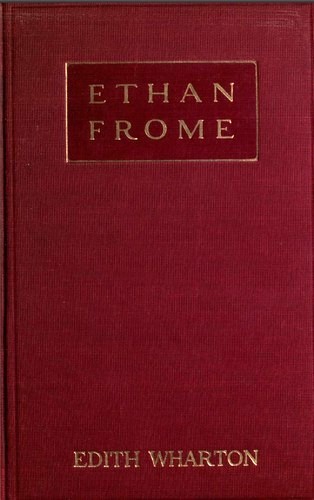
Ethan Frome
Edith Wharton (1911)
“A tale of desire buried under ice and duty — written by a woman trapped in her own marriage, about a man who couldn't escape his.”
This page prints on a single page. Use Ctrl+P / Cmd+P.
Ethan Frome
Edith Wharton (1911) · 195pages · American Realism · 8 AP appearances
Summary
An unnamed narrator, stranded in the bleak New England town of Starkfield, pieces together the story of Ethan Frome — a farmer trapped in a loveless marriage to hypochondriac Zeena, who falls in love with Zeena's young cousin Mattie Silver. When Zeena sends Mattie away, Ethan and Mattie attempt suicide by sled on a snowy hill. They survive — broken, paralyzed, and condemned to live out their lives together in Zeena's care. The accident ends nothing and changes everything.
Why It Matters
Ethan Frome has been continuously in print since 1911 and is one of the most taught American novels at the high school and college level. Initially controversial for its unflinching portrait of marital misery and failed suicide, it is now recognized as one of the defining texts of American litera...
Themes & Motifs
Diction & Style
Register: Formal in narration; rural New England vernacular in dialogue — a precise and deliberate gap between observer and observed
Narrator: The frame narrator is educated, sympathetic, and ultimately limited — he can reconstruct the surface of Ethan's story...
Figurative Language: Moderate
Historical Context
Late 19th / early 20th century New England — the end of the agrarian world: Ethan Frome is set in a dying world. The rural New England economy that produced the Frome farm was already obsolete by 1911 — the young had left, the farms were failing, the old ways of silent end...
Key Characters
Talking Points
- Why does Wharton use a frame narrator instead of telling Ethan's story directly? What does this structural choice cost us, and what does it give us?
- The novel reveals Mattie's paralysis on the first page, before telling the story of how it happened. Why does Wharton give us the outcome before the cause? What does dramatic irony do here that suspense couldn't?
- Zeena Frome is often read as the villain of the novel. Make the strongest possible case for Zeena as a sympathetic character. Does the novel support this reading?
- Harmon Gow says 'Most of the smart ones get away.' What does this mean for how we read Ethan's imprisonment? Is he trapped by stupidity, by circumstance, by character, or by something the novel refuses to name?
- The red pickle dish is Wharton's central symbol. Trace its full significance: what does it represent when it appears on the shelf, when it breaks, when Zeena finds the pieces, and when she carries the pieces to her room?
Notable Quotes
“He was the most striking figure in Starkfield, though he was but the ruin of a man.”
“Harmon drew a slab of tobacco from his pocket and cut off a wedge... 'Most of the smart ones get away.'”
“The querulous drone ceased as I entered, and the woman who had been speaking turned to look at me.”
Why Read This
Because it is short enough to finish, dense enough to reward every close reading, and structurally perfect in a way that is worth understanding as craft. The frame narrative creates dramatic irony before you know how it works. The broken pickle di...