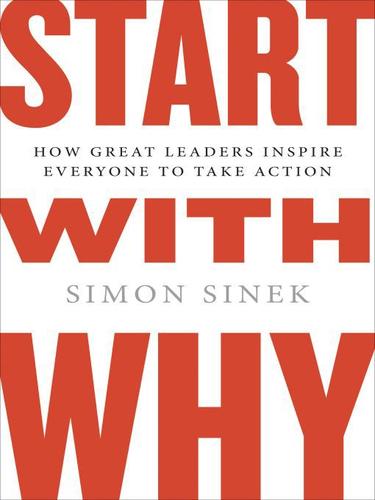
Start with Why
Simon Sinek (2009)
“A leadership thinker reveals that the most inspiring leaders and organizations — from Apple to Martin Luther King Jr. — all think, act, and communicate from the inside out, starting not with what they do but with why they do it.”
Start with Why— Summary & Analysis
by Simon Sinek · published 2009 · 256 pages · Contemporary Nonfiction
A user-friendly study guide for Start with Why by Simon Sinek (2009): a high-level plot summary, full chapter-by-chapter analysis, theme breakdowns, character profiles, and 12 essay questions designed for high-school, college readers. Unlike a stock summary, sumsumsum.com adds a diction analysis drawn from Simon Sinek’s actual text, and reading-difficulty guidance (Easy, 1/10) so students, teachers, and lifelong readers know what they are walking into.
“A leadership thinker reveals that the most inspiring leaders and organizations — from Apple to Martin Luther King Jr. — all think, act, and communicate from the inside out, starting not with what they do but with why they do it.”
Short Summary
Simon Sinek argues that the most influential leaders and organizations share a common pattern: they start with 'why' — their purpose, cause, or belief — before addressing 'how' they do it or 'what' they produce. Through the framework of the Golden Circle, Sinek demonstrates that people don't buy what you do; they buy why you do it. The book explores how this principle explains the success of Apple, the Wright brothers, and Martin Luther King Jr., and why organizations that lose touch with their 'why' eventually lose their ability to inspire.
Detailed Summary
Start with Why opens with a comparison that sets the book's argumentative trajectory. In the early 1900s, Samuel Pierpont Langley had every advantage in the race to achieve powered flight — government funding, prestigious connections, the best engineers money could buy, and intense media attention. ...
Chapter-by-Chapter Analysis
If you liked Start with Why, read next
Start with Drive: The Surprising Truth About What Motivates Us by Daniel H. Pink — Pink's research on intrinsic motivation (autonomy, mastery, purpose) provides the psychological evidence for Sinek's argument that purpose-driven leadership outperforms incentive-based management.. Then try Good to Great by Jim Collins — Collins's research on enduringly great companies identifies 'a culture of discipline' and a 'hedgehog concept' that parallel Sinek's argument about organizational purpose, though Collins grounds his findings in quantitative research rather than narrative.. Or pivot to The Lean Startup by Eric Ries — Ries's methodology complements Sinek's framework — Why provides the direction, while the Build-Measure-Learn loop provides the validation that the direction is correct..