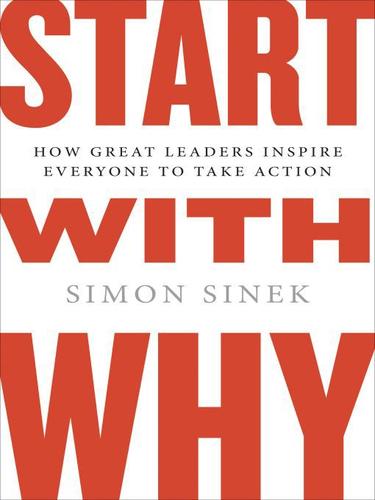
Start with Why
Simon Sinek (2009)
“A leadership thinker reveals that the most inspiring leaders and organizations — from Apple to Martin Luther King Jr. — all think, act, and communicate from the inside out, starting not with what they do but with why they do it.”
Characters in Start with Why
by Simon Sinek · 2009 · 7 characters analyzed
Cast: The Golden Circle, Apple / Steve Jobs, Martin Luther King Jr., The Wright Brothers, Sam Walton / Walmart, The Split, Simon Sinek.
Character Analysis
Sinek's signature contribution — three concentric circles representing Why (purpose), How (process), and What (product). The framework argues that inspiring organizations communicate from the inside out (Why first) while most communicate from the outside in (What first). Its power lies in its simplicity; its vulnerability lies in the same simplicity.
Apple serves as the book's recurring case study for Why-first leadership. Sinek argues that Apple's success stems not from superior technology but from a clear purpose ('Think Different') that attracts customers who share the belief. The heavy reliance on Apple is both a strength (it's a compelling example) and a weakness (it may represent survivorship bias).
Used as the paradigmatic Why-driven company throughout the book
King's 'I Have a Dream' speech is Sinek's paradigmatic example of communicating purpose rather than plan. The analysis is effective but risks reducing the civil rights movement to a communication strategy, underweighting the structural, economic, and political dimensions of the struggle.
Used as the paradigmatic Why-driven leader
The Wright brothers vs. Samuel Langley comparison opens the book and recurs as a touchstone. The brothers' belief in the transformative potential of flight drove persistence that resources and prestige (Langley's advantages) could not match.
Walton's Walmart had a clear Why (serving small-town America). After his death, the company preserved the What (low prices) but lost the Why, becoming a cautionary tale of purpose drift in growing organizations.
The moment when an organization's growth outpaces its purpose and What begins to eclipse Why. The split is gradual and often invisible to those inside the organization — it manifests as declining loyalty, increasing reliance on manipulation, and the erosion of the culture that made the organization great.
Sinek positions himself as someone who discovered the power of Why through personal disillusionment — a marketing consultant who realized he had lost his purpose. His autobiographical vulnerability models the self-examination the book advocates and gives the prescriptive sections a confessional authenticity.