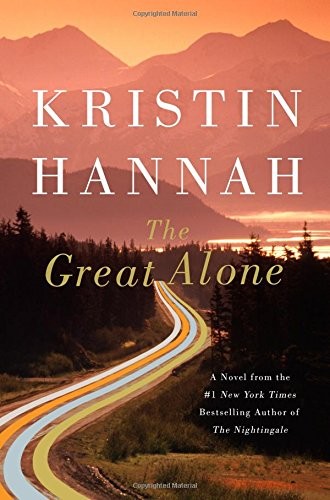
The Great Alone
Kristin Hannah (2018)
“A family follows a broken man to the Alaskan wilderness — and discovers that the greatest danger is not the land, it is the one who brought them there.”
The Great Alone— Historical Context & Author Background
Author: Kristin Hannah · Published 2018· Era: Contemporary·440 pages
Themes explored: survival, family, nature, resilience, alaska, love, isolation
About Kristin Hannah
Kristin Hannah was born in 1960 in Garden Grove, California. Before becoming a novelist she studied law. She has lived in the Pacific Northwest for much of her career, which gives her a genuine relationship with the temperate wilderness that informs her Alaska research. The Great Alone required extensive research into Alaskan geography, homesteading, survivalist movements, and PTSD. She is one of the bestselling novelists in America, known for emotionally intense literary fiction that bridges commercial and literary audiences.
Life → Text Connections
How Kristin Hannah's real experiences shaped specific elements of The Great Alone.
Hannah grew up in California but spent years living in the Pacific Northwest, developing a deep relationship with wilderness landscapes
The extraordinary specificity of Alaskan landscape in the novel — the exact quality of light, the particular flora and fauna, the seasonal rhythms
Hannah writes wilderness from the inside, not as backdrop. Her physical relationship to similar landscapes gives the novel its sensory authority.
Hannah researched PTSD in Vietnam veterans extensively for the novel
Ernt Allbright’s specific symptoms — hypervigilance, paranoia, the particular quality of his triggers — are clinically grounded, not generically troubled
The novel’s refusal to demonize Ernt while refusing to excuse him requires psychological specificity. The research prevents the character from becoming a cartoon.
Hannah was trained as a lawyer before becoming a novelist
The novel’s careful handling of legal aftermath — what charges are filed, what protections exist or do not — is noticeably precise
The institutional response to the crisis is depicted without dramatic falsification. Legal training gives Hannah authority over the systems her characters encounter.
Historical Era
1974 through the late 1980s, spanning the Carter-Reagan era in America and Alaska
How the Era Shapes the Book
The 1970s setting is not arbitrary. The decade represents the peak of both the Alaskan homesteading possibility and the post-Vietnam veteran mental health crisis. Domestic violence law was almost nonexistent by modern standards — marital rape would not be criminalized federally until 1993. The survivalist movement had genuine cultural momentum before it became fringe. Hannah places her story in the exact historical moment when all these conditions could simultaneously exist, making Cora’s entrapment not only emotionally but legally coherent.
Why The Great Alone Matters Historically
The Great Alone debuted at number one on the New York Times bestseller list and remained on it for months. It reached a general audience rarely touched by literary fiction exploring domestic violence, introducing millions of readers to a subject usually confined to smaller-press literary novels. Its publishing success enabled a serious treatment of PTSD, survivalism, and abuse in a commercially dominant novel.
- One of the first bestselling literary novels to use Alaskan wilderness as the primary mechanism of domestic violence entrapment
- Among the first major commercial novels to address Vietnam-era PTSD specifically in the context of homesteading and survivalism
- Demonstrated that serious literary treatment of domestic violence could reach a mass audience without compromising the subject matter
The Great Alone has faced challenges in school districts for its frank depiction of domestic violence, sexual content involving teenagers, and mature themes including PTSD and gun violence. These challenges reflect the same discomfort with difficult truths that the novel itself examines.