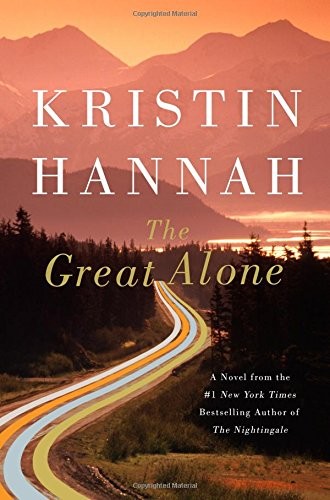
The Great Alone
Kristin Hannah (2018)
“A family follows a broken man to the Alaskan wilderness — and discovers that the greatest danger is not the land, it is the one who brought them there.”
The Great Alone— Summary & Analysis
by Kristin Hannah · published 2018 · 440 pages · Contemporary
A user-friendly study guide for The Great Alone by Kristin Hannah (2018): a high-level plot summary, full chapter-by-chapter analysis, theme breakdowns, character profiles, and 30 essay questions designed for high-school readers. Unlike a stock summary, sumsumsum.com adds a diction analysis drawn from Kristin Hannah’s actual text, and reading-difficulty guidance (Easy, 1/10) so students, teachers, and lifelong readers know what they are walking into.
“A family follows a broken man to the Alaskan wilderness — and discovers that the greatest danger is not the land, it is the one who brought them there.”
Short Summary
In 1974, thirteen-year-old Leni Allbright moves with her parents to a remote homestead in Alaska after her volatile father Ernt receives land from a deceased Vietnam War buddy. Isolated by brutal winters and cut off from help, Leni falls in love with the son of her father’s enemy, while her mother Cora remains trapped in a cycle of abuse that the wilderness only intensifies. What begins as a survivalist adventure becomes a story about what it costs to love someone you cannot save.
Detailed Summary
Leni Allbright is a thirteen-year-old girl accustomed to upheaval. Her father Ernt — a Vietnam POW who came home psychologically shattered — moves the family constantly, chasing dreams that curdle into disasters. When Ernt inherits forty acres in Kaneq, Alaska from a war buddy named Bo Harlan, he se...
Chapter-by-Chapter Analysis
If you liked The Great Alone, read next
Start with The Kite Runner by Khaled Hosseini — PTSD, the costs of war on family structure, and the long shadow of a single catastrophic choice — different geography, parallel emotional architecture. Or pivot to Speak by Laurie Halse Anderson — A young woman carrying the weight of an act of violence that changed her life, navigating a world that does not fully see her truth — Anderson’s version is school-set, Hannah’s is wilderness-set, both are about the cost of survival.
For comparative essays, pair The Great Alone with
The strongest comparative pairing is The Poisonwood Bible (Barbara Kingsolver) — A domineering, damaged patriarch takes his family into an extreme environment; the women survive and reckon with the consequences — told through the perspective of the daughters and wife left to navigate his wreckage. Another productive pairing is Into the Wild (Jon Krakauer) — Alaska as ultimate wilderness destination and site of American individual fantasy — Krakauer’s nonfiction account of Chris McCandless is the dark mirror to Hannah’s survival narrative. For a third angle, contrast with A Thousand Splendid Suns (Khaled Hosseini) — Another novel about women surviving in a context of enforced isolation and male violence — the specific geography differs but the emotional and structural architecture is closely parallel.
Each of these pairings opens a clean thesis path on shared themes, period diction, or formal influence — useful for AP Lit / IB / first-year college comparative essays.
More from Kristin Hannah and the scholars who study Hannah
Other works by Kristin Hannah: The Nightingale (2015, 440 pages). Reading two or three of these in sequence reveals Kristin Hannah’s recurring obsessions and stylistic signatures more clearly than any single book can.