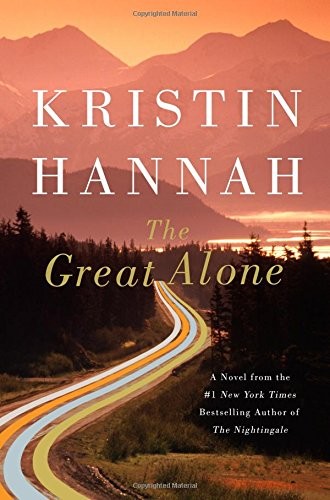
The Great Alone
Kristin Hannah (2018)
“A family follows a broken man to the Alaskan wilderness — and discovers that the greatest danger is not the land, it is the one who brought them there.”
For Students
Because it takes survival seriously — not as adventure but as the daily work of staying alive in a family where danger comes from inside. Alaska is the most vivid classroom for what isolation does to people, what darkness does to minds, and what love costs when it persists in the face of damage. The novel will teach you to read landscape as character and to understand why people stay in situations they know are destroying them.
For Teachers
The accessible prose makes it teachable at the high school level without sacrificing complexity. The dual settings — natural wilderness and domestic entrapment — provide parallel structures for analysis. The novel’s treatment of PTSD, survivalism, and domestic violence is responsible and nuanced, opening discussions that matter to teenage readers. Hannah’s careful seasonal structure makes it an excellent text for analyzing how form and content reinforce each other.
Why It Still Matters
The wilderness amplifies what is already there — and so does the internet, and so does any environment of isolation. Ernt Allbright with a smartphone and a social media echo chamber looks familiar. The specific geography is Alaskan; the dynamic is not. Every family has a version of the darkness that falls when someone you love is suffering in ways that threaten everyone around them. The novel offers not solutions but honest company.