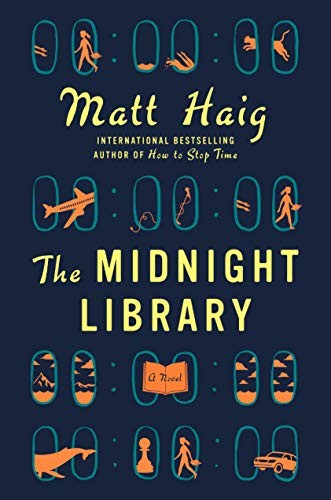
The Midnight Library
Matt Haig (2020)
“A suicidal woman discovers a library between life and death where every book is a life she could have lived — and none of them are what she expected.”
The Midnight Library— Historical Context & Author Background
Author: Matt Haig · Published 2020· Era: Contemporary·288 pages
Themes explored: regret, parallel-lives, depression, choice, meaning, second-chances
About Matt Haig
Matt Haig (born 1975) is a British author who has spoken extensively about his own experience with depression and suicidal ideation, documented in his nonfiction book Reasons to Stay Alive (2015). He experienced a severe depressive and anxiety episode in his early twenties that brought him to the edge of suicide. His fiction consistently engages with mental health, mortality, and the question of what makes life worth living. The Midnight Library was published during the COVID-19 pandemic, when questions of isolation, lost possibilities, and the value of ordinary life had particular resonance. The novel became a global bestseller, reaching #1 on the New York Times bestseller list and selling millions of copies worldwide.
Life → Text Connections
How Matt Haig's real experiences shaped specific elements of The Midnight Library.
Haig experienced suicidal depression in his twenties and has written nonfiction about surviving it
Nora's suicidal episode and the novel's argument that life is worth living despite suffering
The novel's authority on depression comes from lived experience. Haig writes about wanting to die with the precision of someone who has been there.
Haig published the novel during the COVID-19 pandemic, when millions were isolated and reconsidering their life choices
The novel's themes of isolation, regret, and rediscovering the value of ordinary connection
The pandemic gave the novel its cultural moment — readers in lockdown recognized Nora's sense of being trapped between living and merely existing.
Haig studied philosophy at university before becoming a writer
Nora's philosophy degree and the novel's engagement with existentialist thought (Kierkegaard, Thoreau, Sartre)
The philosophical framework is not decorative — it reflects Haig's genuine intellectual formation and gives the novel structural rigor beneath its accessible surface.
Historical Era
Early 2020s — COVID-19 pandemic, mental health crisis, digital isolation
How the Era Shapes the Book
The Midnight Library arrived at a moment when millions of people were, like Nora, sitting alone in their homes, wondering if they had made the right choices. The pandemic made the novel's premise literal: people were cut off from their lives and forced to contemplate what those lives meant. The novel's argument — that ordinary life is sufficient, that connection matters more than achievement — resonated because the pandemic had stripped away everything except the ordinary.
Why The Midnight Library Matters Historically
Published during the COVID-19 pandemic, The Midnight Library became one of the defining novels of the early 2020s, selling over six million copies worldwide and spending more than a year on the New York Times bestseller list. It was selected for numerous book clubs, including the Today Show and Good Morning America, and has been translated into over 40 languages. The novel crystallized a cultural moment of collective existential reckoning.
- One of the most commercially successful novels to center on depression and suicidal ideation without sensationalizing either
- Popularized the many-worlds interpretation of quantum mechanics as a narrative framework for self-help-adjacent literary fiction
- Demonstrated that philosophical fiction could reach mass-market audiences without sacrificing its intellectual core
Not widely banned, though occasionally challenged in school settings for its depiction of suicide. Defenders note the novel's explicitly anti-suicide message and its use by mental health professionals.