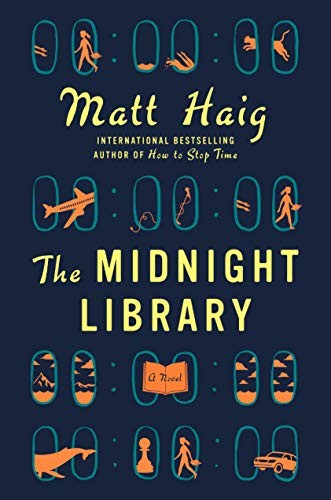
The Midnight Library
Matt Haig (2020)
“A suicidal woman discovers a library between life and death where every book is a life she could have lived — and none of them are what she expected.”
The Midnight Library— Summary & Analysis
by Matt Haig · published 2020 · 288 pages · Contemporary
A user-friendly study guide for The Midnight Library by Matt Haig (2020): a high-level plot summary, full chapter-by-chapter analysis, theme breakdowns, character profiles, and 30 essay questions designed for high-school, ap-english readers. Unlike a stock summary, sumsumsum.com adds a diction analysis drawn from Matt Haig’s actual text, and reading-difficulty guidance (Easy, 2/10) so students, teachers, and lifelong readers know what they are walking into.
“A suicidal woman discovers a library between life and death where every book is a life she could have lived — and none of them are what she expected.”
Short Summary
Nora Seed, overwhelmed by regret and depression, attempts suicide and wakes in the Midnight Library — an infinite space between life and death where every book on the shelves represents a life she could have lived if she had made different choices. Guided by her childhood librarian Mrs. Elm, Nora tries on alternate lives: Olympic swimmer, glaciologist, rock star, philosophy professor, vineyard owner. Each life contains its own disappointments and losses. Nora eventually discovers that the only life worth living is her own — not because it is perfect, but because it is hers. She chooses to return to her root life and truly live it.
Detailed Summary
Nora Seed is thirty-five years old and has arrived at what she considers the logical conclusion of a failed existence. Her cat has died. She has been fired from her job at a music shop. Her brother is estranged. Her ex-fiance Dan resents her for calling off their wedding. Her former bandmate Izzy ha...
Summary in the Author’s Writing Style
A retelling of The Midnight Library in Matt Haig’s style — so you can hear the language, not just the plot. This is a stylistic pastiche written by sumsumsum, not an excerpt from the book.
Nora Seed was thirty-five years old and had run out of reasons. The cat was dead. The job was gone. Her brother no longer spoke to her, and the people who had once needed her had stopped, one by one, until the silence was total. She did the arithmetic of her own life and arrived at zero. So she swa…
Chapter-by-Chapter Analysis
If you liked The Midnight Library, read next
Start with It's a Wonderful Life by Frank Capra (film) — The foundational alternate-reality-as-therapy narrative — George Bailey's angel shows him the world without him; Nora's librarian shows her worlds without her choices. Then try The Bell Jar by Sylvia Plath — Depression rendered from inside — Plath's Esther and Haig's Nora share the experience of watching life from behind glass, unable to participate. Or pivot to The Five People You Meet in Heaven by Mitch Albom — Afterlife as retrospective education — both novels use death's proximity to reframe the meaning of an ordinary life.