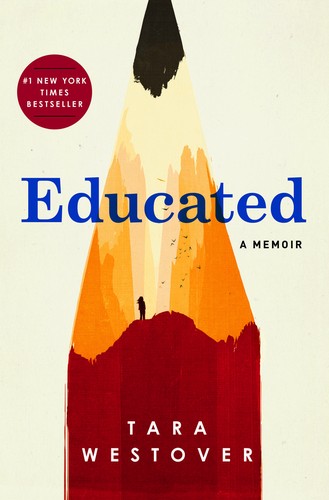
Educated
Tara Westover (2018)
“A woman who never set foot in a classroom until age seventeen earns a PhD from Cambridge — and must decide whether knowledge is worth the family it costs her.”
This page prints on a single page. Use Ctrl+P / Cmd+P.
Educated
Tara Westover (2018) · 334pages · Contemporary · 3 AP appearances
Summary
Tara Westover grows up in a fundamentalist survivalist family in rural Idaho, never attending school, visiting a doctor, or having a birth certificate. At seventeen she teaches herself enough to pass the ACT and enters Brigham Young University. As she pursues education through BYU, Harvard, and Cambridge — where she earns a PhD in history — she is forced to reckon with her family's version of the past, her brother Shawn's violence, and the question of whether truth itself can cost you everyone you love.
Why It Matters
Spent 200+ weeks on the New York Times bestseller list — the longest run of any book since the list changed its methodology. Won the Carnegie Medal for Nonfiction (2020). Translated into 45+ languages. Made Westover the rare memoirist whose first book becomes a cultural event rather than a person...
Themes & Motifs
Diction & Style
Register: Plain and declarative in childhood sections; expands to academic register as Westover's education progresses — the prose performs the memoir's subject
Narrator: Dual narrator: a child's perceptual voice layered beneath an adult's analytical consciousness. The child narrator per...
Figurative Language: Moderate
Historical Context
1980s–2010s rural Idaho; American survivalism and fundamentalist religious subcultures: Ruby Ridge happened just miles from the Westover property and is explicitly referenced. Gene's anti-government beliefs were not eccentric in isolation — they were the intensified version of a genui...
Key Characters
Talking Points
- Westover openly tells us that her memories conflict with her journals and with her family's accounts. Why does she include these contradictions rather than choosing one version? What is she arguing about the nature of memoir — and of memory itself?
- The memoir's prose style changes measurably as Tara's education progresses — simpler, shorter sentences in childhood; longer, more qualified sentences by Cambridge. Is this a deliberate formal choice? What would be lost if she'd written the whole memoir in one consistent style?
- Shawn calls Tara 'Siddle Lister' — a baby-name for 'little sister.' Why does Westover return to this detail repeatedly, and what does it tell you about how language can function as a tool of control?
- Westover says she would not give back her education, but she does not say it was worth the cost. What is the difference between those two statements? Which is more honest?
- Gene Westover's anti-government beliefs are connected to real events in Idaho: Ruby Ridge, the militia movement, Y2K. Does knowing this historical context make him more sympathetic, more dangerous, or neither? Does the memoir invite us to understand him or to judge him?
Notable Quotes
“I had been touched by the world, and I couldn't go home.”
“My father, a man who believed he could heal the sick and raise the dead, believed this also: that the hospitals were run by the Illuminati.”
“There was no doctor. There was only my mother, and she said a blessing, and then we waited.”
Why Read This
Because it's about what you don't know you don't know — and most formal education never makes that problem visible. Westover shows you what it costs to acquire knowledge and what it costs not to. The memoir is also a master class in how narrative ...