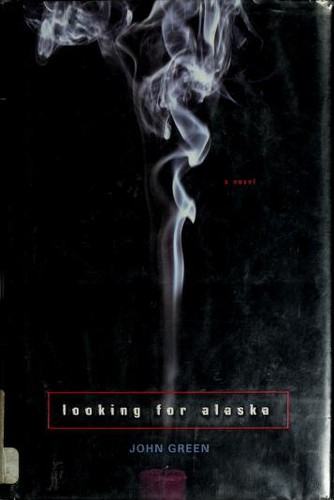
Looking for Alaska
John Green (2005)
“A boy obsessed with famous last words falls in love with a girl who is looking for the way out of the labyrinth — and doesn't survive to find it.”
Looking for Alaska— Historical Context & Author Background
Author: John Green · Published 2005· Era: Contemporary·221 pages
Themes explored: death, meaning, coming-of-age, love, grief, identity, last-words, labyrinth
About John Green
John Green (born 1977) attended Indian Springs School, a boarding school in Alabama, which served as the primary model for Culver Creek. He has said that the novel emerged from his friendships at that school, particularly the experience of losing someone he cared about suddenly. Green was working as a student chaplain at a children's hospital when he was writing an early draft — an experience that sharpened his thinking about death, grief, and the question of meaning in the face of loss. Looking for Alaska was his debut novel and won the 2006 Printz Award for excellence in young adult literature.
Life → Text Connections
How John Green's real experiences shaped specific elements of Looking for Alaska.
Green attended Indian Springs, an Alabama boarding school with a real 'creek' and a tight-knit small student body
Culver Creek's geography, claustrophobic social world, and creek-side smoking rituals
The specificity of Culver Creek — its smells, its social rules, its particular combination of isolation and intimacy — comes from lived experience rather than research. This is why the setting feels real.
Green worked as a student chaplain at a children's hospital before and during writing the novel
The World Religions class discussions about death and the afterlife; Miles's essay on the labyrinth
Green spent years professionally present with dying people and grieving families. The novel's refusal to offer easy consolation about death reflects this proximity to actual loss.
Green has described the novel as emerging from questions he couldn't answer about a specific person he lost
The unresolved accident-vs.-suicide question; Miles's inability to fully know Alaska
The novel's central unknowability is autobiographical in origin. Green couldn't answer the question about his real-world experience and chose not to falsify an answer in the fiction.
Historical Era
Mid-2000s American young adult fiction; the emergence of literary YA
How the Era Shapes the Book
The novel's setting in a world without smartphones is not incidental — it's structural. The inability to text Alaska from the party, to check on her via social media, to receive real-time location data creates the conditions for the tragedy. A 2026 version of the same story is nearly impossible: someone would have texted, someone would have tracked her phone. The novel is partly an elegy for a kind of teenage experience — boundless, unmonitored, genuinely dangerous — that the smartphone largely ended.
Why Looking for Alaska Matters Historically
Looking for Alaska is widely credited as one of the novels that elevated young adult fiction to a literary genre rather than a commercial category. Its willingness to leave central questions unresolved, its genuine philosophical engagement, and its refusal to protect teenage readers from difficult emotional reality set a new standard for what YA could attempt. It has been continuously in print since 2005 and has sold over six million copies. Its influence on subsequent YA literary fiction — from Green's own later work to writers like Rainbow Rowell and Jandy Nelson — is direct.
- One of the first YA novels to use structural device (countdown/count-up) as philosophical argument rather than mere suspense mechanism
- Among the first YA novels to refuse resolution on a central question of character motivation — Alaska's death is never definitively explained
- Demonstrated that teenage readers would engage seriously with philosophy, religion, and questions of meaning when embedded in authentic emotional experience
Among the most frequently challenged books in American schools. Primary objections: sexual content (Miles and Alaska's physical relationship), language, and concerns that the novel 'promotes' suicide or drug/alcohol use. Counter-argument: the novel is precisely about the consequences of reckless choices and is one of the most honest YA treatments of grief and the aftermath of loss available to young readers.