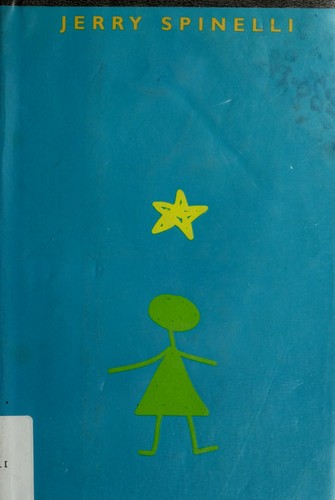
Stargirl
Jerry Spinelli (2000)
“A girl who plays ukulele for strangers, carries a pet rat, and cheers for both teams — until Mica High decides she's too different to forgive.”
This page prints on a single page. Use Ctrl+P / Cmd+P.
Stargirl
Jerry Spinelli (2000) · 186pages · Contemporary
Summary
Leo Borlock, a junior at Mica Area High School in Arizona, is captivated by the strange and radiant new girl who calls herself Stargirl Caraway. She sings happy birthday to strangers, cheers for both teams, and cares nothing about what others think. The school briefly loves her, then turns on her when her radical kindness costs them a basketball championship. Leo, desperate to fit in, begs Stargirl to become 'normal.' She tries — and the normal version of her is unbearable to witness. Leo chooses popularity over her. She disappears, and the cost of that choice haunts him for the rest of his life.
Why It Matters
Stargirl became one of the defining novels of early-2000s middle-grade and YA literature, consistently appearing on school reading lists across the United States. Its directness about the cruelty of conformity, and its refusal to give Leo a redemption arc he didn't earn, made it unusual among nov...
Themes & Motifs
Diction & Style
Register: Conversational and accessible, with lyrical passages in desert/enchanted place scenes — calibrated for middle-grade readers without condescending to them
Narrator: Leo Borlock: retrospective, earnest, increasingly self-critical. He narrates from adulthood, which means every observ...
Figurative Language: Moderate
Historical Context
Late 1990s / early 2000s — pre-social-media American adolescence: The novel was published in 2000, before social media transformed adolescent social life. The shunning Spinelli depicts is entirely face-to-face — total, comprehensive silence in physical space. Thi...
Key Characters
Talking Points
- Leo narrates this story from adulthood, years after the events. How does the retrospective narration change the way we read his choices? What does it mean that he still hasn't let it go?
- Stargirl cheers for both teams. The novel treats this as an act of authentic generosity. But is it also a failure to commit — a refusal to choose a side that inconveniences the people around her?
- The school's shunning of Stargirl is described as total and coordinated, but no single person is identified as organizing it. How does collective cruelty work without a leader? Who is responsible?
- Leo asks Stargirl to become 'normal.' She tries — and the result is 'Susan.' Is Leo's request understandable? Is it forgivable? Are those the same question?
- Archie says Stargirl has 'been herself for fifteen years.' What does it mean to be yourself — and how does the novel distinguish between genuine selfhood and performance of selfhood?
Notable Quotes
“For Leo, who is one of a kind.”
“She was elusive. She was today. She was tomorrow. She was the faintest scent of a cactus flower, the flitting shadow of an elf owl.”
“She was happy in a way that was beyond her control — which means, perhaps, that she was simply happy.”
Why Read This
Because you will never forget Leo's choice, and remembering it at the right moment might make you choose differently. Stargirl is short enough to read in one sitting and precise enough to reread forever. It asks the one question that matters most ...