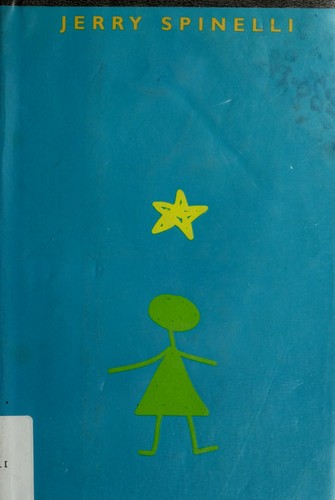
Stargirl
Jerry Spinelli (2000)
“A girl who plays ukulele for strangers, carries a pet rat, and cheers for both teams — until Mica High decides she's too different to forgive.”
Essay Questions & Food for Thought
30questions designed to challenge assumptions and provoke original thinking. These can't be answered from a summary — you need the actual text.
Leo narrates this story from adulthood, years after the events. How does the retrospective narration change the way we read his choices? What does it mean that he still hasn't let it go?
Stargirl cheers for both teams. The novel treats this as an act of authentic generosity. But is it also a failure to commit — a refusal to choose a side that inconveniences the people around her?
The school's shunning of Stargirl is described as total and coordinated, but no single person is identified as organizing it. How does collective cruelty work without a leader? Who is responsible?
Leo asks Stargirl to become 'normal.' She tries — and the result is 'Susan.' Is Leo's request understandable? Is it forgivable? Are those the same question?
Archie says Stargirl has 'been herself for fifteen years.' What does it mean to be yourself — and how does the novel distinguish between genuine selfhood and performance of selfhood?
Why does Spinelli never give us Stargirl's perspective directly? The entire novel is filtered through Leo. What do we gain — and lose — from never being inside Stargirl's head?
Dori Dilson stays loyal to Stargirl throughout the entire shunning, with almost no narrative attention paid to her choice. Why might Spinelli make the most moral character the least noticed one?
The novel was published in 2000, before smartphones and social media. How would Stargirl's story be different today? Could the shunning be as total? Could Stargirl find her people without Mica's approval?
Hillari calls Stargirl 'fake.' Stargirl responds by kissing her on the cheek. What is Stargirl communicating with this response — and why is it unanswerable within the school's social logic?
Stargirl carries a pet rat, plays a ukulele, decorates her desk with daisies, and celebrates strangers' birthdays. Are these characteristics of someone with genuine freedom, or someone performing freedom?
The porcupine tie Leo received in sixth grade is the novel's frame — it bookends the story. Why does Spinelli connect this object to Stargirl? What does the tie represent beyond a piece of clothing?
Compare the desert scenes — the enchanted place — to the school scenes. How does Spinelli use setting to contrast Stargirl's natural world with the social world that rejects her?
Leo chooses to belong. Twenty years later, he is still haunted by what that choice cost him. What does this suggest about the relationship between social belonging and personal happiness?
Stargirl gives Leo gifts after he abandons her — anonymous, carefully placed gifts that show she is still paying attention. Is this an act of love, or is it a form of pressure? Is there a difference?
The school absorbs Stargirl's departure immediately — life goes on without a ripple. Does this make the shunning worse or better? What does it say about how communities treat genuine difference?
Compare Stargirl to Atticus Finch in To Kill a Mockingbird. Both are unusually principled people surrounded by communities that reject what they stand for. What is the difference between moral courage in an adult and moral courage in a teenager?
Stargirl was homeschooled before arriving at Mica High. The novel suggests this is part of what makes her different. Is Stargirl's freedom a result of unusual upbringing — or is it innate? Can it be taught?
The novel never tells us what Stargirl thinks about the shunning. We only see how she appears. Why might Spinelli's choice to withhold her interiority be both a structural strength and an ethical problem?
What is the role of sports in the novel's social hierarchy? Why does the school's treatment of Stargirl turn specifically on a basketball game? What do competitive sports do to communities?
Susan (Stargirl-trying-to-be-normal) is described as competent but diminished. Leo observes this and is horrified, having caused it. Can you love someone and still ask them to diminish themselves? Is love ever innocent of this?
Archie's paleontological perspective — thinking in millions of years — gives him a different relationship to urgency. How does scale change meaning? What would the events of Mica High look like from the timeline of deep time?
The novel ends not with Leo's redemption but with evidence that Stargirl never stopped caring. Does this make the ending hopeful, sad, or both? What kind of love persists without reciprocation?
Compare Stargirl's experience to a modern social media influencer who 'goes viral' and then gets canceled. What is the same? What is different? What does the comparison reveal about how communities process difference?
Leo's collection of unusual ties is his single act of self-expression in a conformist environment. Why is it safe when Stargirl's entire life is not? What makes one form of difference acceptable and another threatening?
Spinelli published a sequel, Love, Stargirl, narrated by Stargirl herself. Does knowing that sequel exists change how you read the ending of this novel? Does Stargirl deserve her own story told in her own voice?
The novel depicts homeschooling as producing someone with unusual freedom and unusual social disadvantages. Is this a fair portrait? What does it suggest about what institutionalized education does to children?
Stargirl dances alone at the oratorical contest, and strangers love it — but Mica does not. Why does the same behavior read as enchanting to strangers and embarrassing to people who know her? What is the difference between a stranger's eye and a familiar one?
The novel's desert scenes are its most beautiful prose. Spinelli uses nature not as backdrop but as argument — the desert teaches Stargirl something the school cannot. What does the natural world represent in this novel that human society doesn't provide?
What does the novel say about the relationship between kindness and popularity? Stargirl is genuinely kind — and it makes her beloved, then reviled. Is the novel pessimistic about whether goodness is rewarded?
If Leo had chosen Stargirl over the school — refused the shunning, stayed by her side — what would his life have looked like? Is the novel asking you to believe the cost of that choice would have been worth it?