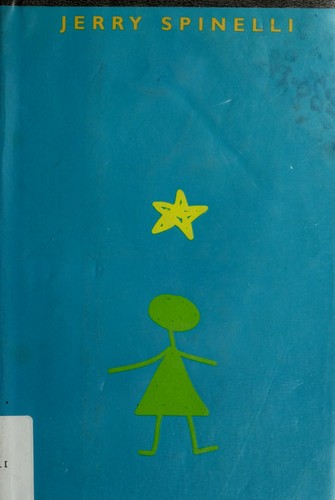
Stargirl
Jerry Spinelli (2000)
“A girl who plays ukulele for strangers, carries a pet rat, and cheers for both teams — until Mica High decides she's too different to forgive.”
Stargirl— Historical Context & Author Background
Author: Jerry Spinelli · Published 2000· Era: Contemporary·186 pages
Themes explored: conformity, individuality, belonging, love, courage, acceptance, community, identity
About Jerry Spinelli
Jerry Spinelli (born 1941) grew up in Norristown, Pennsylvania, and spent much of his career writing about the specific social pressures of American adolescence — particularly the cruelty of conformity and the rarity of genuine individualism. Stargirl was inspired in part by his wife, Eileen Spinelli, who is also a children's author and who he describes as someone who has always operated by her own rules. The novel draws on Spinelli's long observation of how school social systems enforce conformity and punish difference — often without anyone intending to be cruel.
Life → Text Connections
How Jerry Spinelli's real experiences shaped specific elements of Stargirl.
Spinelli married Eileen, an independently-spirited woman who did not conform to social expectations
Stargirl's complete self-possession and her refusal to modify herself for social approval
The portrait of Stargirl has the specificity of someone drawn from life — her generosity and freedom are not abstract ideals but observed human qualities.
Spinelli grew up in a working-class Pennsylvania town where conformity was socially enforced
Mica High's social machinery — the pressure to fit in, the swift punishment of difference
The novel's social dynamics are rendered with the authority of direct experience. Spinelli knows exactly how these mechanisms work.
Historical Era
Late 1990s / early 2000s — pre-social-media American adolescence
How the Era Shapes the Book
The novel was published in 2000, before social media transformed adolescent social life. The shunning Spinelli depicts is entirely face-to-face — total, comprehensive silence in physical space. This is both more humane (no permanent digital record) and more complete (you can avoid a Twitter account; you cannot avoid the school cafeteria). The novel's central conflict would look entirely different in a world where Stargirl could build a following online without needing Mica's approval.
Why Stargirl Matters Historically
Stargirl became one of the defining novels of early-2000s middle-grade and YA literature, consistently appearing on school reading lists across the United States. Its directness about the cruelty of conformity, and its refusal to give Leo a redemption arc he didn't earn, made it unusual among novels for its age group. The sequel, Love, Stargirl (2007), was published by demand — readers wanted more of Stargirl's voice. A Disney+ film adaptation was released in 2020.
- One of the first widely-taught YA novels in which the narrator unambiguously fails the protagonist and is not redeemed
- Early example of a YA novel centered on social conformity as the primary antagonist rather than a person or external threat
- Popularized the 'enchanted outsider' archetype in contemporary middle-grade fiction
Occasionally challenged in school libraries for portraying nonconformity in a positive light and depicting school social culture critically. Some challenges from parents who felt the novel presented peer disapproval as acceptable or that Leo's failure was not properly resolved with redemption.