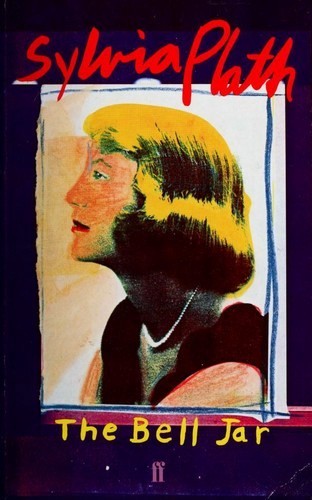
The Bell Jar
Sylvia Plath (1963)
“A brilliant young woman suffocates under the bell jar of 1950s America — and Sylvia Plath wrote every word from the inside.”
The Bell Jar— Historical Context & Author Background
Author: Sylvia Plath · Published 1963· Era: Contemporary / Confessional·244 pages
Themes explored: mental-health, identity, gender, conformity, ambition, madness, society, recovery
About Sylvia Plath
Sylvia Plath (1932–1963) published The Bell Jar under the pseudonym Victoria Lucas one month before her suicide in London on February 11, 1963. She was thirty years old. Like Esther Greenwood, she was from Wellesley, Massachusetts; won a guest editorship at Mademoiselle in the summer of 1953; underwent electro-convulsive therapy improperly administered; survived a serious suicide attempt; and was treated at a private facility funded by a scholarship benefactor. She went on to write Ariel, now considered one of the greatest poetry collections of the twentieth century. She never saw it published. The novel was published under her own name only in 1966, three years after her death.
Life → Text Connections
How Sylvia Plath's real experiences shaped specific elements of The Bell Jar.
Plath won a Mademoiselle guest editorship in summer 1953 and experienced a severe breakdown immediately after
Esther's Ladies' Day internship and its aftermath — the rejection letter, the insomnia, the collapse
The autobiographical source material is almost undisguised. Plath is writing about her own nervous breakdown with the precision of a scientist and the distance of barely enough time.
Plath underwent improperly administered ECT in 1953 and found the experience traumatic
Dr. Gordon's ECT — 'the sap fly out of me like a split plant' — vs. Dr. Nolan's properly administered version
Her firsthand experience makes these scenes testimony as much as fiction. The technical accuracy is personal.
Plath was treated at McLean Hospital, a private psychiatric facility in Belmont, MA
Belsize — the private facility where Dr. Nolan treats Esther
McLean was (and is) a prestigious institution that attracted wealthy patients; Plath got there through scholarship. The class dimension of mental healthcare is autobiographical.
Plath published The Bell Jar under a pseudonym, fearing the autobiographical content would hurt people she knew
The novel's ambivalence about being seen — Esther's simultaneous need to be known and terror of exposure
The pseudonym is itself a bell jar: Plath put her most vulnerable self under glass, visible but sealed.
Historical Era
1950s America — postwar prosperity, feminine mystique, Cold War anxiety
How the Era Shapes the Book
The Bell Jar cannot be separated from the specific social architecture of 1950s American femininity — the expectation that a brilliant woman will use her intelligence to become a better wife and mother, the sexual double standard that allows men experience and demands women purity, the psychiatric establishment's treatment of women's non-conformity as illness. Esther's breakdown is not simply biochemical; it is the result of being an extraordinarily intelligent person in a world that will not let her be extraordinary. The Cold War anxiety runs through the text literally (the Rosenbergs) and metaphorically (the fear of being seen as dangerous, different, subversive).
Why The Bell Jar Matters Historically
Published in January 1963 in England under the pseudonym Victoria Lucas, then republished under Plath's name in 1966 after her death. Initially dismissed in America as too autobiographical, too depressing, too 'female' a subject. By the 1970s it had become a touchstone for second-wave feminism. Now assigned in AP English, college courses, and mental health curricula worldwide. Sells hundreds of thousands of copies annually fifty years after publication.
- One of the first major American novels to depict clinical depression from the inside without either romanticizing it or presenting it as moral failure
- Among the first works of fiction to present psychiatric treatment — specifically ECT — as a political rather than purely medical act
- A founding text of confessional literature's transition into novel form — Plath doing in prose what she was doing in Ariel in poetry
Challenged and banned in numerous school districts for its frank depiction of suicide, attempted suicide, sexual content, and its 'immoral' worldview. Also challenged for 'offensive language' and its critical treatment of gender roles. Ironically, its continued appearance on banned book lists keeps it continuously in circulation.