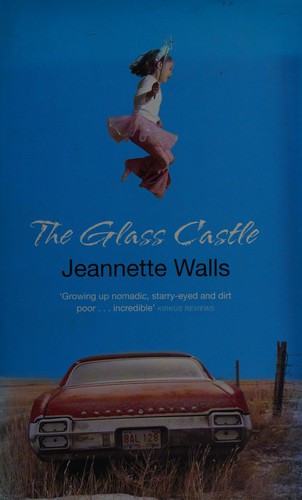
The Glass Castle
Jeannette Walls (2005)
“A woman watches her parents dumpster-dive from a Manhattan taxi and realizes she has spent her whole life ashamed of the people who made her.”
The Glass Castle— Historical Context & Author Background
Author: Jeannette Walls · Published 2005· Era: Contemporary Memoir·288 pages
Themes explored: family, poverty, resilience, education, forgiveness, self-invention, dysfunction, love
About Jeannette Walls
Jeannette Walls was born in Phoenix, Arizona in 1960 and grew up exactly as described in the memoir — a nomadic childhood in the Southwest and Appalachian West Virginia, with Rex and Rose Mary Walls as her parents. She attended Barnard College in New York, paid for largely by herself, and became a successful journalist and gossip columnist for New York magazine. She was engaged to writer John Taylor and later married writer and farmer John Gillam. She lived for years in a Manhattan apartment and did not write the memoir until her friends knew the truth about her parents — Rose Mary Walls, when told Jeannette was writing about their family, said 'Just tell the truth.' The memoir was published in 2005 and spent more than 261 weeks on the New York Times bestseller list, ultimately becoming one of the best-selling memoirs of the century.
Life → Text Connections
How Jeannette Walls's real experiences shaped specific elements of The Glass Castle.
Walls worked as a gossip columnist in Manhattan before writing the memoir
The opening scene — Walls in a cocktail dress in a taxi — reflects her actual social world at the time she saw her mother in the dumpster
The contrast between her professional life and her parents' homelessness was literal, not constructed for effect.
Walls attended Barnard College largely on her own dime, working multiple jobs
The memoir's detailed accounting of saved money, stolen savings, and rebuilt savings reflects genuine financial precarity
The numbers in the memoir are real. The escape fund Rex stole was real. The rebuilding was real.
Rose Mary Walls is still alive and gave her blessing to the memoir
The memoir's refusal to villainize Rose Mary reflects both Jeannette's actual feeling and a possible awareness of her mother's readership
The question of what the memoir omits or softens because of Rose Mary's survival is worth asking.
Walls spent years lying about her parents' circumstances to Manhattan social contacts
The memoir's central confession is not the childhood — it's the adult shame and concealment
The book is as much about the adult Jeannette's relationship to her past as about the past itself.
Historical Era
1960s–2005 America — mid-century American Southwest and Appalachia, Reaganomics and poverty, New York in the 1980s and 90s
How the Era Shapes the Book
Rex and Rose Mary's anti-government, anti-institutional philosophy has a specific 1960s-70s countercultural context — they see themselves as free spirits resisting conformity, not as negligent parents. The Appalachian poverty of Welch is historically specific: West Virginia's coal economy was in severe decline, and the social fabric of towns like Welch was fraying. The memoir's New York sections reflect the late-80s and 90s boom in finance and media that created the income inequality visible in Jeannette's adult life.
Why The Glass Castle Matters Historically
One of the best-selling memoirs of the 21st century, spending over five years on the New York Times bestseller list. It revitalized the literary memoir as a genre and sparked widespread public debate about what children owe their parents, what parents owe their children, and whether poverty memoirs romanticize or accurately report their subjects. It also prompted serious ethical discussion about memoir as form: how much can an author shape family members' lives without their full consent?
- Among the first major memoirs to present parental neglect without demanding the reader's condemnation of the parents
- Popularized the term 'functional chaos' as a framework for understanding unconventional family structures
- Demonstrated that a memoirist's restraint — refusing to perform victimhood — can itself be a literary achievement
Challenged in several school districts for descriptions of sexual abuse, alcohol, and parental neglect. Also challenged by parents who argue the memoir normalizes child neglect by framing it as producing resilience.