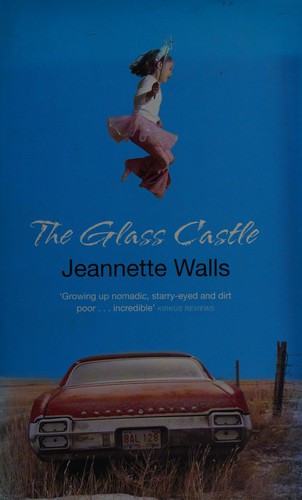
The Glass Castle
Jeannette Walls (2005)
“A woman watches her parents dumpster-dive from a Manhattan taxi and realizes she has spent her whole life ashamed of the people who made her.”
The Glass Castle— Summary & Analysis
by Jeannette Walls · published 2005 · 288 pages · Contemporary Memoir
A user-friendly study guide for The Glass Castle by Jeannette Walls (2005): a high-level plot summary, full chapter-by-chapter analysis, theme breakdowns, character profiles, and 30 essay questions designed for middle-school, high-school, ap-english readers. Unlike a stock summary, sumsumsum.com adds a diction analysis drawn from Jeannette Walls’s actual text, the 4 documented AP Literature exam appearances of this book, and reading-difficulty guidance (Easy, 1/10) so students, teachers, and lifelong readers know what they are walking into.
“A woman watches her parents dumpster-dive from a Manhattan taxi and realizes she has spent her whole life ashamed of the people who made her.”
Short Summary
Jeannette Walls grew up in a family of nomadic, brilliant misfits led by her charismatic, alcoholic father Rex and her self-absorbed artist mother Rose Mary. She and her siblings spent their childhoods in poverty across the American Southwest and Appalachia, moving constantly to evade creditors and reality. Despite neglect, hunger, and danger, Jeannette put herself through school and became a journalist in New York. The memoir opens with an adult Jeannette spotting her homeless mother rummaging through a dumpster in Manhattan — and asking herself why she is ashamed.
Detailed Summary
The Glass Castle opens in New York City in 1989. Jeannette Walls is a successful Manhattan journalist riding in a taxi when she sees her mother digging through a dumpster. She sinks low in the seat, ashamed. That shame — its origins, its price, and ultimately its dissolution — is what the book is ab...
Summary in the Author’s Writing Style
A retelling of The Glass Castle in Jeannette Walls’s style — so you can hear the language, not just the plot. This is a stylistic pastiche written by sumsumsum, not an excerpt from the book.
I was sitting in a taxi, wondering if I had overdressed for the evening, when I saw Mom rooting through a dumpster. I sank low in the seat. I told the driver to take me home, and I was ashamed, and I did not yet know why. I was three years old the first time I caught fire. I was boiling hot dogs on…
Chapter-by-Chapter Analysis
If you liked The Glass Castle, read next
Start with Angela's Ashes by Frank McCourt — The defining poverty memoir comparison — both are unsentimental accounts of chaotic childhoods, but McCourt performs the tragedy where Walls reports it. Then try The Liar's Club by Mary Karr — A Texas childhood as chaotic as the Wallses', with a mother whose damage is harder to contain — more literary, more furious, equally essential. Or pivot to This Boy's Life by Tobias Wolff — A chaotic boyhood with an abusive stepfather — another memoir that refuses the easy victim posture.
For comparative essays, pair The Glass Castle with
The strongest comparative pairing is Educated (Tara Westover) — The most direct spiritual descendant — a daughter escaping an eccentric, self-sufficient, destructive family through education, written with similar restraint. For a third angle, contrast with The Color of Water (James McBride) — A son's reckoning with a complicated parent — different in race and geography, similar in its refusal to simplify the parent being examined.
Each of these pairings opens a clean thesis path on shared themes, period diction, or formal influence — useful for AP Lit / IB / first-year college comparative essays.