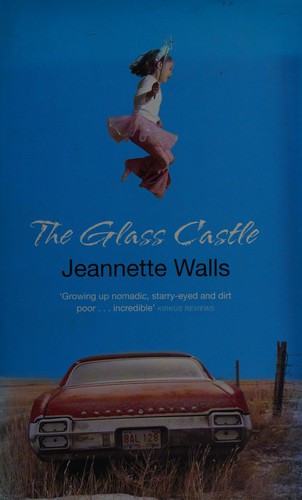
The Glass Castle
Jeannette Walls (2005)
“A woman watches her parents dumpster-dive from a Manhattan taxi and realizes she has spent her whole life ashamed of the people who made her.”
Why This Book Matters
One of the best-selling memoirs of the 21st century, spending over five years on the New York Times bestseller list. It revitalized the literary memoir as a genre and sparked widespread public debate about what children owe their parents, what parents owe their children, and whether poverty memoirs romanticize or accurately report their subjects. It also prompted serious ethical discussion about memoir as form: how much can an author shape family members' lives without their full consent?
Firsts & Innovations
Among the first major memoirs to present parental neglect without demanding the reader's condemnation of the parents
Popularized the term 'functional chaos' as a framework for understanding unconventional family structures
Demonstrated that a memoirist's restraint — refusing to perform victimhood — can itself be a literary achievement
Cultural Impact
Over 261 weeks on the New York Times bestseller list — one of the longest memoir runs in the list's history
Adapted into a 2017 film directed by Destin Daniel Cretton, starring Brie Larson, Woody Harrelson, and Naomi Watts
Sparked a major public conversation about the ethics of memoir — who owns family stories?
Widely taught in middle school, high school, and college as a model of personal narrative writing
Prompted Rose Mary Walls's own memoir, Half Broke Horses, a fictionalized account of her mother's life
Banned & Challenged
Challenged in several school districts for descriptions of sexual abuse, alcohol, and parental neglect. Also challenged by parents who argue the memoir normalizes child neglect by framing it as producing resilience.