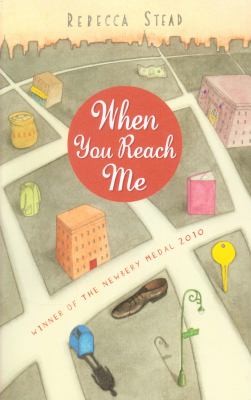
When You Reach Me
Rebecca Stead (2009)
“A sixth-grader in 1970s New York receives notes from the future — and has to figure out who sent them before it is too late to stop a death.”
This page prints on a single page. Use Ctrl+P / Cmd+P.
When You Reach Me
Rebecca Stead (2009) · 199pages · Contemporary
Summary
Twelve-year-old Miranda lives with her single mom in a New York City apartment in 1978. Strange notes begin appearing — written by someone who knows things that have not happened yet. As Miranda and her friends navigate sixth grade, a fading friendship, and a neighborhood mystery, she slowly realizes the notes are real, the danger is real, and that saving a life will require accepting something impossible about time.
Why It Matters
Won the Newbery Medal in 2010. The Newbery is the most prestigious award in American children's literature, and When You Reach Me won it over a strong field. The win was seen as an endorsement of intelligent genre-blending — the novel is simultaneously a realistic middle-grade story, a mystery, a...
Themes & Motifs
Diction & Style
Register: Informal but precise — a smart child's voice that notices details without performing observation
Narrator: Miranda: retrospective child narrator who is smarter than she knows she is. Her plainness is not a limitation but a c...
Figurative Language: Low to moderate
Historical Context
1978 New York City — post-fiscal-crisis, pre-gentrification, urban working-class life: The 1978 setting is not accidental nostalgia. It creates the conditions the novel requires: a child who navigates the city alone, a neighborhood with genuine economic precarity and visible homeless...
Key Characters
Talking Points
- Miranda addresses her entire letter to someone she does not name until the end. How does knowing the letter has a specific recipient change how you read the book?
- Why does Sal stop talking to Miranda after Marcus punches him? Why does Stead never give us Sal's point of view directly?
- The novel is set in 1978 even though it was published in 2009. Why does Stead choose to set the story in the past? What does the era provide that the present could not?
- Marcus punches Sal, which causes Sal to change his route, which is what puts him near the mail truck on the day of the accident. Is Marcus's punch evil, neutral, or good? Can a harmful act be part of a good outcome?
- Compare A Wrinkle in Time, which Miranda loves, to When You Reach Me. In what ways is Stead writing a response to or continuation of L'Engle's ideas about time and sacrifice?
Notable Quotes
“I am writing these letters to you, but I am also writing them to myself.”
“Sal just stopped talking to me. Not in a mean way. He just... stopped.”
“The laughing man was always there when I walked past, laughing at something I could not see.”
Why Read This
Because it is a mystery that rewards attention the way good mysteries should, and because it is built so cleanly that once you finish you want to start over and see all the pieces you missed. It is also a novel about friendship that is honest abou...