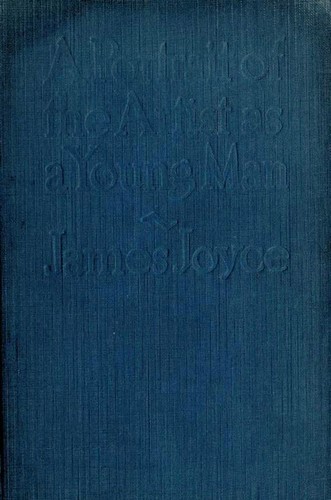
A Portrait of the Artist as a Young Man
James Joyce (1916)
“The novel that grew up with its hero — the prose literally evolves from baby talk to aesthetic philosophy as Stephen Dedalus forges a soul.”
At a Glance
Stephen Dedalus grows from an oversensitive Dublin Catholic schoolboy into a young man who rejects his family, his Church, and his country in order to become an artist. The novel traces his awakening consciousness through five chapters, each written in a prose style that mirrors Stephen's age and intellectual development — baby talk at the start, elaborate aesthetic theory at the end. By the final pages he vows to 'forge in the smithy of my soul the uncreated conscience of my race.'
Read full summary →Why This Book Matters
First published serially in The Egoist (1914–1915) and as a book in 1916, A Portrait established the free indirect discourse style that would define modernist fiction. It is the first major novel to make the prose itself perform consciousness — the style is not a frame around Stephen's mind, it IS his mind at each stage of development. The novel invented techniques that Virginia Woolf, William Faulkner, and every subsequent stream-of-consciousness writer would build on.
Diction Profile
Radically shifting — from pre-literate baby talk in Chapter One to elaborate Scholastic philosophical prose in Chapter Five, with every register in between
High and growing