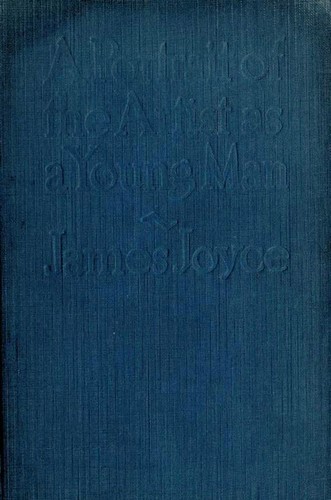
A Portrait of the Artist as a Young Man
James Joyce (1916)
“The novel that grew up with its hero — the prose literally evolves from baby talk to aesthetic philosophy as Stephen Dedalus forges a soul.”
Similar Books
Thematic connections across eras and genres — books that talk to each other.
Ulysses
James Joyce
The direct sequel — Stephen Dedalus returns to Dublin, older and having failed to become the artist he declared himself in Portrait. Reading both destroys Portrait's triumphant ending and rebuilds it as tragedy
The Catcher in the Rye
J.D. Salinger
The American vernacular equivalent — Holden Caulfield's rejection of phonies mirrors Stephen's rejection of Ireland, but without the aesthetic theory and without the exile. What rebellion looks like without a destination
Sons and Lovers
D.H. Lawrence
Contemporary modernist bildungsroman — Paul Morel's emergence from working-class English Nottinghamshire echoes Stephen's from Catholic Irish Dublin. Both novels wrestle with the mother-bond the artist must break to become himself
The Bell Jar
Sylvia Plath
Same structure — intelligent young person trying to become an artist collides with every institution that would define them. Where Stephen's antagonist is the Church, Esther Greenwood's is patriarchal domesticity
Invisible Man
Ralph Ellison
Another first-person bildungsroman about a young man trying to construct an identity against institutions that insist on defining him from outside. The weapons are different — silence and exile vs. engagement and irony — but the project is identical
Dubliners
James Joyce
Joyce's companion piece — the short stories that map the paralysis Stephen is escaping. Reading Dubliners shows you the Dublin Stephen runs from; Portrait shows you the running