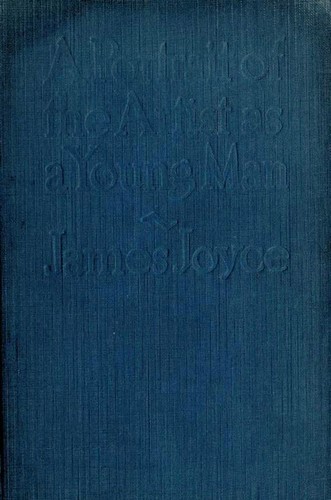
A Portrait of the Artist as a Young Man
James Joyce (1916)
“The novel that grew up with its hero — the prose literally evolves from baby talk to aesthetic philosophy as Stephen Dedalus forges a soul.”
A Portrait of the Artist as a Young Man— Summary & Analysis
by James Joyce · published 1916 · 299 pages · Modernist
A user-friendly study guide for A Portrait of the Artist as a Young Man by James Joyce (1916): a high-level plot summary, full chapter-by-chapter analysis, theme breakdowns, character profiles, and 30 essay questions designed for ap-english, college, ib readers. Unlike a stock summary, sumsumsum.com adds a diction analysis drawn from James Joyce’s actual text, the 9 documented AP Literature exam appearances of this book, and reading-difficulty guidance (Moderate, 4/10) so students, teachers, and lifelong readers know what they are walking into.
“The novel that grew up with its hero — the prose literally evolves from baby talk to aesthetic philosophy as Stephen Dedalus forges a soul.”
Short Summary
Stephen Dedalus grows from an oversensitive Dublin Catholic schoolboy into a young man who rejects his family, his Church, and his country in order to become an artist. The novel traces his awakening consciousness through five chapters, each written in a prose style that mirrors Stephen's age and intellectual development — baby talk at the start, elaborate aesthetic theory at the end. By the final pages he vows to 'forge in the smithy of my soul the uncreated conscience of my race.'
Detailed Summary
The novel opens with Stephen as a very small child absorbing the world through sensation: a story his father tells him, the smell of the oilsheet on his bed, the colors of political factions at Clongowes Wood College, the Catholic boarding school where he is enrolled far too young. The prose imitate...
Summary in the Author’s Writing Style
A retelling of A Portrait of the Artist as a Young Man in James Joyce’s style — so you can hear the language, not just the plot. This is a stylistic pastiche written by sumsumsum, not an excerpt from the book.
Once upon a time and a very good time it was there was a little boy named Stephen and the boy was small and the world came at him in pieces. His father told him a story through a glass. The oilsheet had a queer smell. There were two cushions, the maroon one and the green one, and you could not have …
Chapter-by-Chapter Analysis
If you liked A Portrait of the Artist as a Young Man, read next
Start with The Catcher in the Rye by J.D. Salinger — The American vernacular equivalent — Holden Caulfield's rejection of phonies mirrors Stephen's rejection of Ireland, but without the aesthetic theory and without the exile. What rebellion looks like without a destination. Then try The Bell Jar by Sylvia Plath — Same structure — intelligent young person trying to become an artist collides with every institution that would define them. Where Stephen's antagonist is the Church, Esther Greenwood's is patriarchal domesticity. Or pivot to Invisible Man by Ralph Ellison — Another first-person bildungsroman about a young man trying to construct an identity against institutions that insist on defining him from outside. The weapons are different — silence and exile vs. engagement and irony — but the project is identical.
For comparative essays, pair A Portrait of the Artist as a Young Man with
The strongest comparative pairing is Sons and Lovers (D.H. Lawrence) — Contemporary modernist bildungsroman — Paul Morel's emergence from working-class English Nottinghamshire echoes Stephen's from Catholic Irish Dublin. Both novels wrestle with the mother-bond the artist must break to become himself.
Each of these pairings opens a clean thesis path on shared themes, period diction, or formal influence — useful for AP Lit / IB / first-year college comparative essays.
More from James Joyce and the scholars who study Joyce
Other works by James Joyce: Dubliners (1914, 224 pages), Ulysses (1922, 730 pages). Reading two or three of these in sequence reveals James Joyce’s recurring obsessions and stylistic signatures more clearly than any single book can.
The standard scholarly entry points to James Joyce’s work: Richard Ellmann (Oxford, Goldsmiths' Professor) — James Joyce (1959, rev. 1982). These are the works graduate seminars cite when teaching James Joyce.