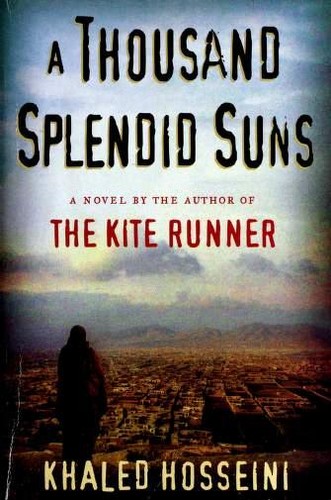
A Thousand Splendid Suns
Khaled Hosseini (2007)
“Two women in Kabul — born a generation apart, brought together by a cruel man, bound by a love that becomes the most radical act of resistance either can imagine.”
This page prints on a single page. Use Ctrl+P / Cmd+P.
A Thousand Splendid Suns
Khaled Hosseini (2007) · 372pages · Contemporary Fiction · 6 AP appearances
Summary
Mariam is an illegitimate child in Herat who is married at fifteen to Rasheed, a Kabul shoemaker decades her senior. Laila is Mariam's young neighbor, orphaned by a rocket attack and married to Rasheed against her will. The two women begin as rivals in Rasheed's household and become each other's salvation. When Rasheed tries to kill Laila, Mariam kills him to save her. Mariam is executed by the Taliban. Laila escapes with her children, eventually returning to Kabul to rebuild a school. The novel is their story — two lives destroyed and rebuilt by the same wars, the same laws, the same man.
Why It Matters
A Thousand Splendid Suns debuted at number one on the New York Times bestseller list and remained on it for over a year. It sold over four million copies in the first year and has since become one of the bestselling novels of the 21st century. It arrived at a moment — 2007, during the US occupati...
Themes & Motifs
Diction & Style
Register: Formal in narration; colloquial in dialogue; elevated in moments of lyrical significance. Farsi and Dari terms embedded without translation — 'harami,' 'bibi,' 'jan,' 'kaka' — taught through context.
Narrator: Third person limited — alternating between Mariam and Laila, maintaining close access to each character's interiority...
Figurative Language: Moderate
Historical Context
1970s–2003 — Afghanistan from monarchy through coup, Soviet invasion, mujahideen civil war, Taliban rule, and post-9/11 occupation: Each political transition in Afghanistan directly changes the material conditions of Mariam's and Laila's lives. The novel does not treat political history as background — it is the foreground. The...
Key Characters
Talking Points
- The novel's first word is 'harami' — bastard. How does this single word set up the entire novel's argument about how the words we are given at birth shape the lives we are allowed to live?
- Mariam and Laila begin as rivals and become each other's salvation. What specific moments shift their relationship? How does Hosseini mark the transition from hostility to love?
- Rasheed is not a monster from the first chapter. Hosseini introduces him as demanding but not yet violent. Why does it matter that his abuse builds gradually rather than beginning at maximum intensity?
- Laila had a choice: marry Rasheed or face the street, alone and pregnant in a city under siege. Is this a real choice? What does the novel say about decisions made under coercion?
- The Taliban chapters are written in a documentary register — shorter sentences, fewer adjectives, stripped of lyricism. Why does Hosseini change his prose style for atrocity? What would be wrong with describing the Taliban's edicts poetically?
Notable Quotes
“Like a compass needle that points north, a man's accusing finger always finds a woman.”
“She was five years old the first time Mariam heard the word harami. It meant an unwanted thing.”
“A man will sully a woman's honor with his eyes. The burqa keeps a woman safe.”
Why Read This
Because the novel makes history human at a scale you can hold. You will understand what the Taliban's gender edicts meant to two specific women, in a specific house, in a specific neighborhood of Kabul — not as statistics but as lived experience. ...