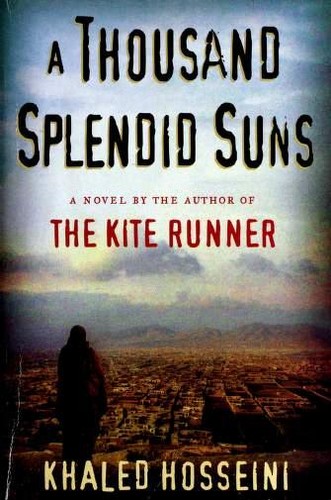
A Thousand Splendid Suns
Khaled Hosseini (2007)
“Two women in Kabul — born a generation apart, brought together by a cruel man, bound by a love that becomes the most radical act of resistance either can imagine.”
Language Register
Formal in narration; colloquial in dialogue; elevated in moments of lyrical significance. Farsi and Dari terms embedded without translation — 'harami,' 'bibi,' 'jan,' 'kaka' — taught through context.
Syntax Profile
Hosseini uses sentence length as an emotional barometer — longer, more subordinate sentences in moments of interiority and reflection; short, declarative sentences in moments of violence, decision, or revelation. Dialogue is direct and naturalistic. The prose is designed to be read quickly and felt deeply — it does not announce its artistry.
Figurative Language
Moderate — Hosseini uses figurative language precisely rather than densely. His strongest images are embedded in action rather than stopping the narrative for description. The pomegranate tree in Jalil's garden, the kite string, the burqa's mesh grille — each image does double work as object and symbol.
Era-Specific Language
Bastard / illegitimate child — Farsi/Dari. The word given to Mariam at birth, the word she spends the novel surviving.
Full-body veil required by the Taliban — in the novel, the burqa is both literal garment and symbol of enforced invisibility
Arabic phrase meaning 'if God wills it' — used throughout the novel both sincerely and as fatalistic acceptance of the unchangeable
Islamic fighters — originally fighting Soviets, later fighting each other for control of Kabul, causing the civil war that precedes the Taliban
Small hut — Mariam's childhood home outside Herat. The word carries a weight of isolation and poverty that 'cottage' or 'house' would not.
How Characters Speak — Class & Identity
Mariam
Simple, direct speech. No education beyond Mullah Faizullah's Koran lessons. Her language is declarative, concrete, almost without abstraction.
A woman whose access to language was limited — and who achieves the novel's most significant moral clarity despite it. Hosseini's argument: wisdom is not the property of the educated.
Laila
More elaborate sentences, more abstraction, the language of someone who was taught to think. Her internal narration is richer than her speech — the private mind the burqa hides.
Education as inner life preserved. Laila's more complex language is the direct product of Babi's insistence that she learn.
Rasheed
Authoritative declaratives in domestic settings; performative generosity with outsiders. His language is control — giving and withholding permission.
A man whose authority depends on being the only speaker. He gives instructions, not conversations.
Babi
Thoughtful, referential, book-formed language. He quotes, contextualizes, explains. His language sounds like someone who has spent his life reading.
The intellectual who couldn't protect himself — his language is his only remaining dignity under Taliban rule. He uses it to teach Laila even when there's nothing else to give her.
Narrator's Voice
Third person limited — alternating between Mariam and Laila, maintaining close access to each character's interiority without becoming first person. The narration is sympathetic without being sentimentalizing — it reports what the women feel and think without editorializing about whether they should feel it.
Tone Progression
Part One — Mariam
Melancholy, intimate, restrained grief
Hosseini establishes Mariam's world with careful sympathy. The tragedy is present but not catastrophic yet — the prose is tender.
Part Two — Laila
More animated, politically aware, shadowed by coming loss
Laila's world is richer — more movement, more color — and the loss when it comes is correspondingly greater.
Part Three — Taliban
Documentary, controlled, deliberately stripped of lyricism
The atrocity sections refuse to aestheticize. The prose is the plainest in the novel.
Part Four — After
Cautiously hopeful, elegiac, forward-looking
The city is returning. The sentences open up. The novel allows itself to imagine continuation.
Stylistic Comparisons
- The Kite Runner (Khaled Hosseini) — the companion novel, told from a male Afghan perspective; the two together form Hosseini's complete portrait of his country
- The Poisonwood Bible (Barbara Kingsolver) — women surviving in a country being destroyed by outside political forces; the domestic and geopolitical inseparable
- Persepolis (Marjane Satrapi) — Iranian woman's memoir of revolution and survival, graphic novel form; different form, overlapping political terrain
Key Vocabulary from This Book
Notable words used in this text — click to see full definitions