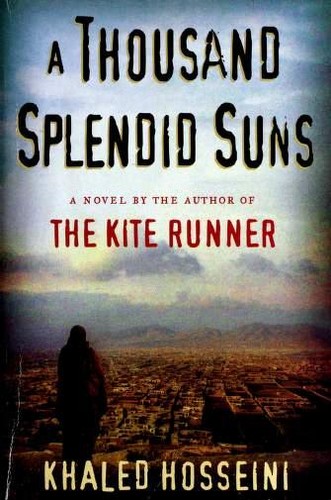
A Thousand Splendid Suns
Khaled Hosseini (2007)
“Two women in Kabul — born a generation apart, brought together by a cruel man, bound by a love that becomes the most radical act of resistance either can imagine.”
For Students
Because the novel makes history human at a scale you can hold. You will understand what the Taliban's gender edicts meant to two specific women, in a specific house, in a specific neighborhood of Kabul — not as statistics but as lived experience. Hosseini's prose is genuinely readable, which makes this the rare literary novel you can finish in a week and think about for years. The relationship between Mariam and Laila is one of the most precisely rendered female friendships in contemporary fiction.
For Teachers
The novel is historically inexhaustible — it covers five distinct political eras and can anchor a unit on any of them. The gender politics are specific enough for feminist analysis without being polemical. The dual narrative structure supports exercises in perspective and voice. Pairs naturally with The Kite Runner for comparative studies, with The Poisonwood Bible for transnational feminist literature, and with Persepolis for comparative memoir.
Why It Still Matters
The novel asks what love looks like when survival is uncertain — and answers that it looks like staying, like making someone eat, like picking up a shovel to stop a strangling. It asks what hope looks like when history keeps making hope absurd — and answers that it looks like making a list of supplies for an orphanage. These are not abstract questions. They are the questions of anyone who has ever stayed in a bad situation too long, or tried to build something in a world that keeps breaking it.