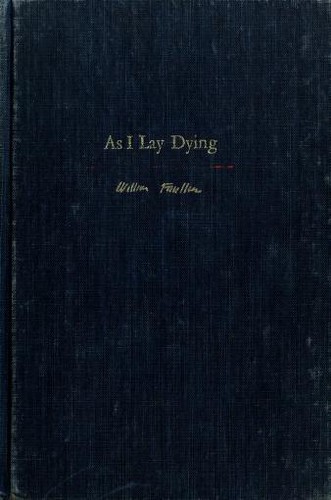
At a Glance
Addie Bundren dies on a Mississippi farm. Her husband Anse, despite being broke and feckless, promised to bury her in Jefferson — forty miles away. Her five children have conflicting, often selfish reasons for making the journey. Over nine days the family hauls Addie's rotting coffin through flood, fire, and social catastrophe. Each chapter is narrated by a different character — fifteen voices in all. The coffin arrives. Addie is buried. Anse promptly gets new teeth and a new wife. The family is destroyed.
Read full summary →Why This Book Matters
Published in 1930 to modest critical attention; now considered one of the formal masterpieces of world literature. The multi-narrator technique — 15 voices in 59 chapters with no authoritative external narrator — was unprecedented in American fiction and remains one of the most ambitious formal experiments in the novel form. Faulkner won the Nobel Prize in 1949 (with his wider body of work). The novel demonstrated that modernist stream-of-consciousness technique was not the exclusive property of European urban consciousness — that it could be applied to rural, working-class, Southern American experience with equal or greater force.
Diction Profile
Ranges from Latinate literary prose (Darl) to near-agrammatical fragments (Vardaman) within the same chapter; formally elevated religious cadences (Whitfield) vs. farm-plain declaratives (Cash). No single register — the novel's form IS the fragmentation of register.
Extremely high in Darl's chapters; almost zero in Cash's. The novel's figurative language is unevenly distributed by character