This page prints on a single page. Use Ctrl+P / Cmd+P.
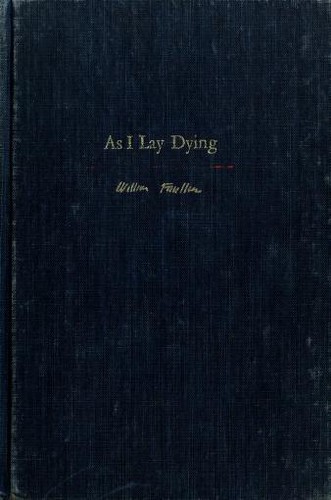
As I Lay Dying
William Faulkner (1930) · 267pages · Modernist / Southern Gothic · 9 AP appearances
Summary
Addie Bundren dies on a Mississippi farm. Her husband Anse, despite being broke and feckless, promised to bury her in Jefferson — forty miles away. Her five children have conflicting, often selfish reasons for making the journey. Over nine days the family hauls Addie's rotting coffin through flood, fire, and social catastrophe. Each chapter is narrated by a different character — fifteen voices in all. The coffin arrives. Addie is buried. Anse promptly gets new teeth and a new wife. The family is destroyed.
Why It Matters
Published in 1930 to modest critical attention; now considered one of the formal masterpieces of world literature. The multi-narrator technique — 15 voices in 59 chapters with no authoritative external narrator — was unprecedented in American fiction and remains one of the most ambitious formal e...
Themes & Motifs
Diction & Style
Register: Ranges from Latinate literary prose (Darl) to near-agrammatical fragments (Vardaman) within the same chapter; formally elevated religious cadences (Whitfield) vs. farm-plain declaratives (Cash). No single register — the novel's form IS the fragmentation of register.
Narrator: Fifteen narrators; no external narrator; no authoritative center. Faulkner provides no framework for adjudicating bet...
Figurative Language: Extremely high in Darl's chapters; almost zero in Cash's. The novel's figurative language is unevenly distributed by character
Historical Context
Rural Mississippi, late 1920s — post-Reconstruction South, Great Depression threshold: The Bundrens' poverty is not metaphorical — it is the poverty of actual Mississippi farm families in the years just before the Depression ground them further. The family cannot afford the doctor wh...
Key Characters
Talking Points
- Why does Faulkner give Addie only one chapter — and place it in the middle of the novel rather than at the beginning? What would be gained or lost if we heard Addie's voice first?
- Darl narrates events he is not physically present for, including his mother's death and details of the barn fire. Is he psychic, delusional, or imagining with preternatural accuracy? Does it matter which?
- Vardaman says 'My mother is a fish.' Analyze this statement as a child's philosophical proposition, not as evidence of mental illness. What is his internal logic?
- Cash builds the coffin with extraordinary care while Addie watches from the window. Is this act of carpentry loving, cruel, or both? How does Cash himself understand it?
- Addie says 'words are no good; that words don't ever fit even what they are trying to say.' How does the novel's fifteen-narrator structure either prove or disprove her thesis?
Notable Quotes
“Jewel and I come up from the field, following the path in single file.”
“Although I am fifteen feet ahead of him, anyone watching us from the cotton-house can see Jewel's freckles and the whites of his eyes and that his ...”
“I have tried to live right in the sight of God and man, for the honor and comfort of my Christian husband and the love and respect of my Christian ...”
Why Read This
Because no other novel in American literature shows you what language actually is — and what it costs when you don't have it, or have too much of it. Each narrator sounds completely different from every other narrator in this book. Reading fifteen...