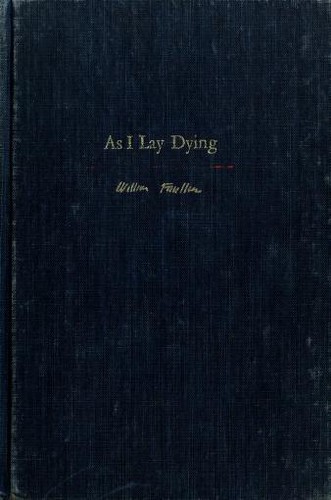
Why This Book Matters
Published in 1930 to modest critical attention; now considered one of the formal masterpieces of world literature. The multi-narrator technique — 15 voices in 59 chapters with no authoritative external narrator — was unprecedented in American fiction and remains one of the most ambitious formal experiments in the novel form. Faulkner won the Nobel Prize in 1949 (with his wider body of work). The novel demonstrated that modernist stream-of-consciousness technique was not the exclusive property of European urban consciousness — that it could be applied to rural, working-class, Southern American experience with equal or greater force.
Firsts & Innovations
First major American novel with a rotating narrator structure of this scale — 15 narrators, 59 chapters
First sustained application of Joycean stream-of-consciousness to Southern working-class rural experience
One of the first American novels to present a corpse as the organizing principle of a narrative journey
Vardaman's 'My mother is a fish' became a landmark example in minimalist chapter technique and stream-of-consciousness pedagogy
Cultural Impact
Taught in virtually every AP English and college literature survey alongside The Sound and the Fury
The multi-narrator technique influenced Cloud Atlas, The Poisonwood Bible, Olive Kitteridge, A Visit from the Goon Squad, and dozens of contemporary novels
Vardaman's fish line became a touchstone example in every discussion of stream of consciousness and childhood grief
The novel's Southern Gothic influence extends through Flannery O'Connor, Cormac McCarthy, and contemporary Southern writers
Darl's chapter narrating events he wasn't present for became a defining case study in narratological theory — on focalization, omniscience, and unreliable narration
Banned & Challenged
Challenged for profanity, sexual content (Dewey Dell's pregnancy and the MacGowan assault), and nihilism. Occasionally challenged for its blackly comic treatment of the Whitfield character as an affront to Christian values. Its relative obscurity compared to Gatsby or Mice and Men protected it from concerted challenges.