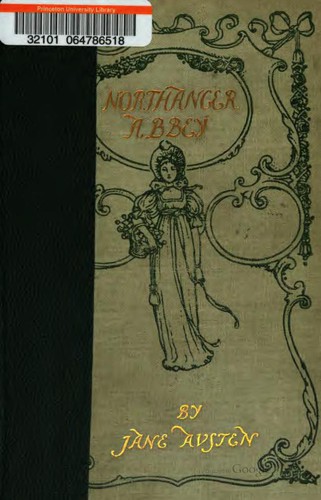
Northanger Abbey
Jane Austen (1817)
“A young woman raised on Gothic novels arrives at a real abbey and discovers that real life is far more dangerous — and far more ordinary — than fiction.”
This page prints on a single page. Use Ctrl+P / Cmd+P.
Northanger Abbey
Jane Austen (1817) · 260pages · Romantic / Regency · 7 AP appearances
Summary
Naive Catherine Morland, a clergyman's daughter who devours Gothic novels, visits Bath and befriends the charming but manipulative Thorpe siblings and the witty Tilneys. Invited to the ancient Northanger Abbey by the Tilneys, her Gothic-soaked imagination conjures murder plots and sinister secrets that do not exist. She is humiliated, corrected, and eventually educated by experience — and by the love of Henry Tilney. The novel is both a coming-of-age story and a pointed satire of the Gothic genre, the novel-reading panic of the 1790s, and the social machinery that shapes women's lives.
Why It Matters
Written in the 1790s but published posthumously in 1817 alongside Persuasion, Northanger Abbey is both Austen's first major novel and a work that contains the seeds of all her mature concerns. It is the only Austen novel that directly addresses the act of novel-reading, making it uniquely valuabl...
Themes & Motifs
Historical Context
Regency England — 1790s-1810s, Bath social scene, Gothic novel mania: The Gothic panic was real: actual critics argued that novel-reading corrupted young women's minds, inflamed their imaginations, and made them unfit for domestic life. Austen's parody is not just li...
Key Characters
Talking Points
- The first sentence tells us Catherine Morland 'would' not be supposed born to be a heroine. What genre is Austen attacking, and why does beginning with a negative make the attack more effective than a positive introduction would?
- Henry Tilney says 'The person who has not pleasure in a good novel must be intolerably stupid.' Is Austen being ironic here, or is Henry speaking for her? How do you tell the difference in this novel?
- Catherine imagines General Tilney murdered his wife. He did not — but is she entirely wrong about his character? What did he actually do to Mrs. Tilney, and what did he do to Catherine?
- Isabella Thorpe uses Gothic vocabulary ('horrid,' 'amazing,' 'dreadful') to describe things that are exciting and pleasant. What does this linguistic inflation tell us about Gothic fiction's effect on everyday speech?
- John Thorpe lies to General Tilney about Catherine's wealth — first inflating it, then deflating it. He does this carelessly, not maliciously. Does the absence of malicious intent make him less responsible for the harm he causes?
Notable Quotes
“No one who had ever seen Catherine Morland in her infancy would have supposed her born to be an heroine.”
“She was fond of all boy's plays, and greatly preferred cricket... to books.”
“What have you been doing with yourself all this morning? — Have you gone on horseback? Have you had a pleasant ride? — What did you think of the co...”
Why Read This
Because Northanger Abbey teaches you how to read novels by being a novel about reading novels. Every technique Austen uses — irony, free indirect discourse, the gap between what characters say and what they mean — is also the novel's subject. Read...