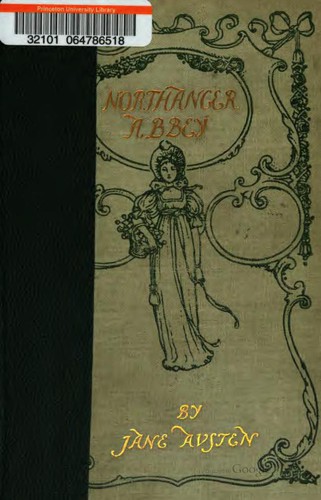
Northanger Abbey
Jane Austen (1817)
“A young woman raised on Gothic novels arrives at a real abbey and discovers that real life is far more dangerous — and far more ordinary — than fiction.”
Northanger Abbey— Historical Context & Author Background
Author: Jane Austen · Published 1817· Era: Romantic / Regency·260 pages
Themes explored: imagination, satire, gothic, reading, innocence, deception, reality, growth
About Jane Austen
Life → Text Connections
How Jane Austen's real experiences shaped specific elements of Northanger Abbey.
Historical Era
Regency England — 1790s-1810s, Bath social scene, Gothic novel mania
How the Era Shapes the Book
The Gothic panic was real: actual critics argued that novel-reading corrupted young women's minds, inflamed their imaginations, and made them unfit for domestic life. Austen's parody is not just literary but social — she is defending the right of women to read, to imagine, and to exercise intellectual judgment. The marriage market mechanics (the General's calculation about Catherine's wealth, John Thorpe's manipulation of her social calendar) are drawn from life. And Bath's specific geography — the distance between the Lower Rooms and the Pump Room, the hierarchy of who walks where — would have been immediately legible to contemporary readers.
Why Northanger Abbey Matters Historically
Written in the 1790s but published posthumously in 1817 alongside Persuasion, Northanger Abbey is both Austen's first major novel and a work that contains the seeds of all her mature concerns. It is the only Austen novel that directly addresses the act of novel-reading, making it uniquely valuable to students of the novel as a form.
- One of the first English novels to use Gothic parody as a sustained structural device
- One of the first novels to directly defend the novel as a serious literary form within the novel itself
- Earliest example of what we now call metafiction in the English novel tradition
Not formally banned, but routinely dismissed as a minor work by Victorian critics who preferred the 'mature' Austen of Pride and Prejudice and Emma. 20th-century scholars, particularly feminist critics, have substantially revised this view.