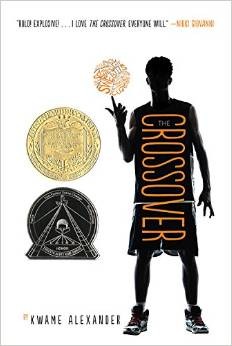
The Crossover
Kwame Alexander (2014)
“A novel written in slam-poetry verse about twin brothers, basketball, and the shot clock running out on childhood.”
The Crossover— Summary & Analysis
by Kwame Alexander · published 2014 · 237 pages · Contemporary
A user-friendly study guide for The Crossover by Kwame Alexander (2014): a high-level plot summary, full chapter-by-chapter analysis, theme breakdowns, character profiles, and 30 essay questions designed for middle-school, high-school readers. Unlike a stock summary, sumsumsum.com adds a diction analysis drawn from Kwame Alexander’s actual text, and reading-difficulty guidance (Easy, 1/10) so students, teachers, and lifelong readers know what they are walking into.
“A novel written in slam-poetry verse about twin brothers, basketball, and the shot clock running out on childhood.”
Short Summary
Twelve-year-old Josh Bell (nicknamed Filthy McNasty) and his twin brother Jordan (JB) are basketball stars riding the highs of middle school. Their father, Chuck 'Da Man' Bell, a former professional player, coaches them from the driveway while their mother Crystal keeps the family grounded. When JB starts dating Miss Sweet Tea and drifting away from Josh, the brothers' bond fractures on and off the court. Meanwhile, Chuck refuses to see a doctor despite alarming symptoms. The family's world shatters when Chuck suffers a massive stroke and dies, forcing Josh to confront what it means to lose someone who seemed invincible.
Detailed Summary
Josh Bell, who goes by the nickname Filthy McNasty (after a Miles Davis album), is a twelve-year-old basketball prodigy with shoulder-length dreadlocks and a crossover dribble that leaves defenders grasping at air. His identical twin brother Jordan — JB — is equally talented but smoother, more socia...
Summary in the Author’s Writing Style
A retelling of The Crossover in Kwame Alexander’s style — so you can hear the language, not just the plot. This is a stylistic pastiche written by sumsumsum, not an excerpt from the book.
Call me Filthy McNasty. Twelve years old, dreadlocks down my back like a championship banner, and a crossover so cold defenders end up on the floor asking the ref how they got there. My twin JB and me, we are two halves of the same buzzer-beater. I don't have to look. He's already cutting to the ri…
Chapter-by-Chapter Analysis
If you liked The Crossover, read next
Start with Long Way Down by Jason Reynolds — Verse novel about a young Black boy in crisis — darker and more urban than The Crossover, but shares Alexander's belief that poetic form can reach readers prose cannot. Then try The Poet X by Elizabeth Acevedo — Verse novel where spoken word poetry is both subject and form — Acevedo's Dominican-American protagonist discovers her voice the way Josh discovers his grief. Or pivot to Monster by Walter Dean Myers — Mixed-form YA centering a young Black male voice — Myers uses screenplay format where Alexander uses verse, but both experiment with form to capture perspectives mainstream fiction ignores.
For comparative essays, pair The Crossover with
The strongest comparative pairing is Brown Girl Dreaming (Jacqueline Woodson) — Another Newbery-winning verse memoir centered on Black childhood — Woodson's register is quieter and more reflective where Alexander's bounces, but both prove poetry can carry a full life story.
Each of these pairings opens a clean thesis path on shared themes, period diction, or formal influence — useful for AP Lit / IB / first-year college comparative essays.