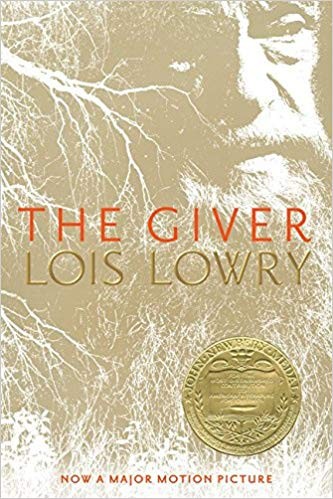
The Giver
Lois Lowry (1993)
“A society without pain is also a society without color, music, love, or the right to choose — and one boy is forced to carry all of it alone.”
The Giver— Literary & Historical Significance
Why This Book Matters
The Giver was the first major dystopian novel written for young readers and remains the defining text of the genre. It won the 1994 Newbery Medal and has sold more than 12 million copies. It is among the most frequently assigned books in American middle schools and among the most frequently challenged — a combination that makes it a cultural flashpoint about what children should be allowed to read and think. Its exploration of euthanasia, infanticide, and the limits of state power remains as controversial in 2026 as it was in 1994.
Firsts & Innovations
First widely read dystopian novel written for a middle-grade audience — established the template for The Hunger Games, Divergent, and subsequent YA dystopia
One of the first YA novels to depict state-administered euthanasia with full moral clarity and without softening
Pioneered the use of prose style itself as a thematic argument — the flatness of the early chapters IS the critique
Cultural Impact
Named one of the 100 most important books of the 20th century by multiple literary organizations
Adapted into a 2014 film starring Jeff Bridges and Meryl Streep, and a Broadway musical (2023)
The Quartet (The Giver, Gathering Blue, Messenger, Son) expanded into a full interconnected world
The novel's central question — would you give up pain if it meant giving up joy? — has entered general cultural discourse
Used in education to introduce ethical philosophy, dystopian literature, and discussions of memory and identity
Banned & Challenged
Consistently among the most challenged and banned books in American school libraries. Common objections: depictions of euthanasia (infant and elderly), violence (the battlefield memory, the baby's injection), sexual content (the Stirrings dream), and — most revealingly — the portrayal of a seemingly good society as dystopian, which some communities have read as an attack on stability and order. The irony that the novel's premise is the banning of dangerous thought has not gone unremarked.