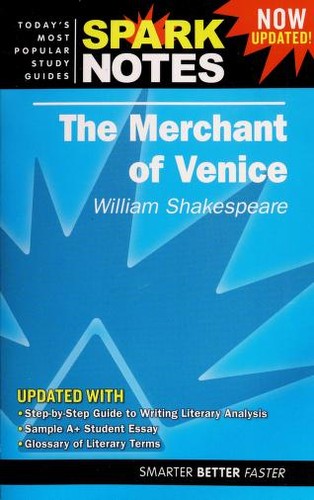
The Merchant of Venice
William Shakespeare (1600)
“A pound of flesh, a courtroom disguise, and the question Western literature still cannot answer: is Shylock a villain or a victim?”
This page prints on a single page. Use Ctrl+P / Cmd+P.
The Merchant of Venice
William Shakespeare (1600) · 75pages · Renaissance · 7 AP appearances
Summary
Bassanio borrows money from Antonio, who borrows from the Jewish moneylender Shylock, pledging a pound of his own flesh as collateral. Bassanio wins the hand of Portia through the casket test. Antonio's ships are lost; Shylock demands his bond. Portia disguises herself as a lawyer and defeats Shylock in court by turning the law's letter against him. Shylock is stripped of his wealth and forced to convert to Christianity. The lovers celebrate at Belmont. The comedy ends. The audience is not sure it should be smiling.
Why It Matters
The Merchant of Venice is one of the most contested works in Western literature because it centers on a Jewish character whose treatment raises questions the play refuses to answer definitively. It has been used both to promote antisemitism (Nazi Germany staged it as propaganda) and to critique i...
Themes & Motifs
Diction & Style
Register: Elizabethan blank verse for nobility and courtroom rhetoric; prose for servants and comic scenes; Shylock code-switches between legalistic precision and raw emotional outcry
Narrator: No narrator — the play is drama. The closest thing to a choral voice is the collective commentary of Salerio, Solanio...
Figurative Language: High
Historical Context
Elizabethan England, late 1590s — religious conflict, commercial expansion, and the legal status of religious minorities: The Merchant of Venice was written for an audience that had no Jewish neighbors but strong anti-Jewish stereotypes inherited from medieval Christianity. The play both exploits and complicates these...
Key Characters
Talking Points
- Portia's mercy speech argues that mercy 'droppeth as the gentle rain from heaven.' Yet when Shylock refuses mercy, Portia shows none. Is the speech sincere, or is it a legal tactic — an offer she knows Shylock will refuse, setting up the kill?
- Shakespeare gives Shylock the play's most eloquent defense of shared humanity ('Hath not a Jew eyes?') and then has him demand a pound of human flesh. Why does he put these two things in the same character? What is he doing to the audience?
- The casket test rewards the suitor who chooses lead — who 'must give and hazard all he hath.' But Bassanio hazards nothing of his own: his courtship is funded by Antonio's flesh. Does this undermine his choice, or does it not matter?
- Shylock says 'I am content' when ordered to convert to Christianity. What is in those two words? Defeat? Despair? Relief? Numbness? How should an actor deliver them, and why?
- Jessica steals her father's money AND her dead mother Leah's ring, which she trades for a monkey. Is Jessica a liberating figure escaping oppression, or a betrayer whose theft triggers the play's tragedy? Can she be both?
Notable Quotes
“In sooth, I know not why I am so sad.”
“You call me misbeliever, cutthroat dog, / And spit upon my Jewish gaberdine.”
“If you repay me not on such a day, / In such a place, such sum or sums as are / Expressed in the condition, let the forfeit / Be nominated for an e...”
Why Read This
Because this is the play that forces you to decide what you think about justice, mercy, and prejudice — and the play will not tell you the right answer. Shylock is the most complex character you will encounter in Shakespeare's comedies, and unders...