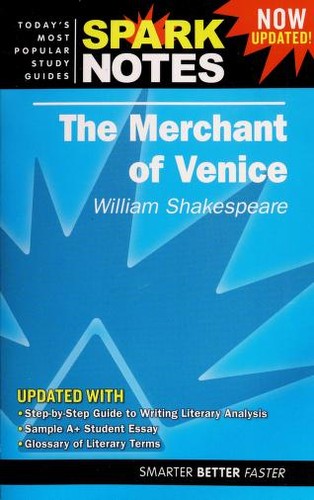
The Merchant of Venice
William Shakespeare (1600)
“A pound of flesh, a courtroom disguise, and the question Western literature still cannot answer: is Shylock a villain or a victim?”
Language Register
Elizabethan blank verse for nobility and courtroom rhetoric; prose for servants and comic scenes; Shylock code-switches between legalistic precision and raw emotional outcry
Syntax Profile
The play operates in three distinct syntactic modes. Portia's Belmont speech is lyric and expansive — long sentences that seem to breathe. Her courtroom speech is Latinate, periodic, and devastating in its precision. Shylock's syntax is argumentative: conditional clauses, rhetorical questions, legal terminology embedded in emotional speech. His 'Hath not a Jew eyes' builds through accumulating questions that demand response. Antonio's syntax is passive and resigned throughout — he rarely initiates, rarely argues, rarely fights.
Figurative Language
High — the play is saturated with commercial metaphor (love as transaction, flesh as currency, mercy as debt), legal metaphor (bonds, contracts, forfeitures applied to human relationships), and musical imagery (harmony as moral order). Shylock's figurative language draws from commerce and the Hebrew Bible; the Christians draw from classical mythology and the New Testament. The two figurative worlds rarely overlap.
Era-Specific Language
The practice of lending money at interest — the economic activity for which Shylock is both needed and despised
A long cloak worn by Jews in Venice — the garment Antonio spat upon, a marker of visible Jewish identity
A legally binding contract — in the play, the pound-of-flesh agreement that drives the plot and tests Venice's legal system
Venetian gold coin — the play's unit of value, constantly measuring the relationship between money and human worth
A non-citizen resident — the legal category invoked against Shylock in the trial, weaponizing his status as outsider
A small chest — the containers of Portia's father's riddle, each inscribed with a test of the suitor's values
Shakespeare puns on gentle (kind/noble) and Gentile (non-Jewish) — the wordplay collapses moral and religious categories
How Characters Speak — Class & Identity
Portia
Lyric verse in Belmont — expansive, allusive, musical. Legal prose-verse in court — precise, controlled, devastating. She commands both registers with equal authority.
A mind that can operate in any register it chooses. Her linguistic range is the source of her power — she speaks Belmont and Venice fluently.
Shylock
Legalistic syntax in negotiation, raw emotional outcry in grief, rhetorical accumulation in the 'Hath not a Jew eyes' speech. His language is always arguing, always defending.
A man whose entire linguistic life is shaped by the need to justify his existence. Even his most human speech — the plea for common feeling — is structured as an argument because argument is the only mode Venice allows him.
Antonio
Passive, elegiac, resigned verse. He rarely initiates conversation. His syntax is marked by acceptance rather than assertion.
A man defined by what he gives away — money, his body, his life. His passivity in language mirrors his passivity in the plot. He does not act; he is acted upon.
Bassanio
Eloquent, ornamental verse in courtship — philosophically sound but rhetorically polished. His casket speech argues against ornament in ornamental language.
The contradiction between his words and his situation: he criticizes surface appearances while being funded by borrowed money and another man's flesh. His rhetoric is better than his position.
Gratiano
Blunt, aggressive, bawdy prose and verse. He says what others think. His taunting of Shylock in court is unfiltered Christian triumphalism.
The comedy's id — the voice that speaks the community's cruelty without euphemism or apology. Where Portia uses law, Gratiano uses insult.
Launcelot Gobbo
Malapropisms, puns, and mangled logic. His language is comic misuse of formal diction.
The servant class mirrors the master class in miniature. Launcelot's debate about leaving Shylock parodies the play's serious moral arguments in degraded form.
Narrator's Voice
No narrator — the play is drama. The closest thing to a choral voice is the collective commentary of Salerio, Solanio, and Gratiano, who function as Venice's Greek chorus — reporting events, mocking Shylock, and voicing the Christian community's attitudes. Their reliability is questionable, and their bias is visible.
Tone Progression
Act I
Comic, commercial, uneasy
The tone of a comedy establishing its premises — romantic courtship, financial dealing — with a knife-edge bond lurking underneath.
Act II
Romantic and satirical — with an undertow of theft and loss
Casket tests provide comedy; Jessica's elopement introduces genuine grief. The comedy starts to cost something.
Act III
Split — Belmont lyric, Venice furious
Bassanio wins Portia in warmth and music. Shylock delivers the play's most human and most dangerous speech. The two worlds collide.
Act IV
Legal, tense, devastating
The trial scene operates at maximum intensity — mercy speech, legal reversal, forced conversion. The comedy's resolution is indistinguishable from cruelty.
Act V
Beautiful, harmonious, haunted
Moonlight and music and reunion — but the absent Shylock is the most present thing in the scene. The beauty is real. So is its cost.
Stylistic Comparisons
- Othello — race and belonging in Venice; both plays explore what the city-state does to the outsider it needs
- Measure for Measure — another play where mercy and law collide, with a disguised authority figure who manipulates the outcome
- A Midsummer Night's Dream — comedy resolved through transformation, but here the transformation is violent: conversion, not enchantment
- The Crucible — a community that destroys the outsider while claiming to enforce justice
Key Vocabulary from This Book
Notable words used in this text — click to see full definitions