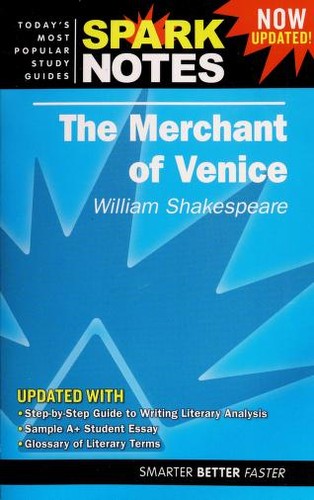
The Merchant of Venice
William Shakespeare (1600)
“A pound of flesh, a courtroom disguise, and the question Western literature still cannot answer: is Shylock a villain or a victim?”
The Merchant of Venice— Summary & Analysis
by William Shakespeare · published 1600 · 75 pages · Renaissance
A user-friendly study guide for The Merchant of Venice by William Shakespeare (1600): a high-level plot summary, full chapter-by-chapter analysis, theme breakdowns, character profiles, and 30 essay questions designed for high-school, ap-english, college readers. Unlike a stock summary, sumsumsum.com adds a diction analysis drawn from William Shakespeare’s actual text, the 7 documented AP Literature exam appearances of this book, and reading-difficulty guidance (Easy, 3/10) so students, teachers, and lifelong readers know what they are walking into.
“A pound of flesh, a courtroom disguise, and the question Western literature still cannot answer: is Shylock a villain or a victim?”
Short Summary
Bassanio borrows money from Antonio, who borrows from the Jewish moneylender Shylock, pledging a pound of his own flesh as collateral. Bassanio wins the hand of Portia through the casket test. Antonio's ships are lost; Shylock demands his bond. Portia disguises herself as a lawyer and defeats Shylock in court by turning the law's letter against him. Shylock is stripped of his wealth and forced to convert to Christianity. The lovers celebrate at Belmont. The comedy ends. The audience is not sure it should be smiling.
Detailed Summary
The Merchant of Venice opens in Venice, where Antonio, a wealthy Christian merchant, is melancholy for reasons he cannot explain. His friend Bassanio needs money to court Portia, a rich heiress in Belmont whose dead father's will requires suitors to choose correctly among three caskets — gold, silve...
Summary in the Author’s Writing Style
A retelling of The Merchant of Venice in William Shakespeare’s style — so you can hear the language, not just the plot. This is a stylistic pastiche written by sumsumsum, not an excerpt from the book.
In sooth, the merchant knows not why he grieves. His argosies ride out upon the brine, full-fraught with silk and spice and venture, yet his heart sits heavy as a leaden weight, and he can give his sadness neither name nor cause. Salerio names it for him — 'tis the sea, the tossing of his fortunes o…
Chapter-by-Chapter Analysis
If you liked The Merchant of Venice, read next
Start with The Crucible by Arthur Miller — A community that destroys the outsider while claiming to enforce justice and moral order. Both plays use a legal proceeding to expose the gap between a society's stated values and its actual behavior.. Then try To Kill a Mockingbird by Harper Lee — A trial that reveals a community's prejudice — the legal system as a mirror of who the community is willing to protect and who it is willing to sacrifice.. Or pivot to A Raisin in the Sun by Lorraine Hansberry — Economic exclusion as a tool of racial and ethnic oppression — both works dramatize what happens when a marginalized community tries to claim the same economic rights as the dominant culture..
More from William Shakespeare and the scholars who study Shakespeare
Other works by William Shakespeare: A Midsummer Night's Dream (1596, 80 pages), As You Like It (1599, 80 pages), Hamlet (1600, 120 pages), Henry V (1599, 90 pages). Reading two or three of these in sequence reveals William Shakespeare’s recurring obsessions and stylistic signatures more clearly than any single book can.
The standard scholarly entry points to William Shakespeare’s work: Stephen Greenblatt (Harvard, Cogan University Professor) — Will in the World (2004); Harold Bloom (Yale, Sterling Professor) — Shakespeare: The Invention of the Human (1998); James Shapiro (Columbia, Larry Miller Professor) — 1599: A Year in the Life of Shakespeare (2005). These are the works graduate seminars cite when teaching William Shakespeare.