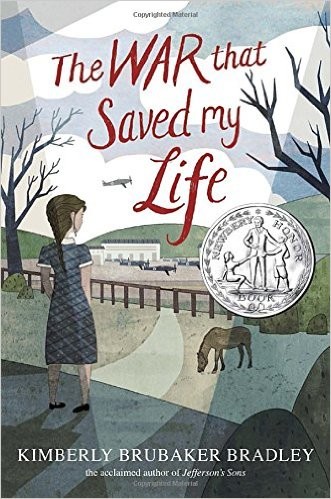
The War That Saved My Life
Kimberly Brubaker Bradley (2015)
“For one girl trapped in a London flat by her own mother, World War II is not a catastrophe — it is an escape.”
This page prints on a single page. Use Ctrl+P / Cmd+P.
The War That Saved My Life
Kimberly Brubaker Bradley (2015) · 316pages · Contemporary
Summary
Ada Smith has spent her entire life locked in a one-room apartment in London by her mother, who is ashamed of Ada's clubfoot. When World War II begins and children are evacuated from the city, Ada escapes with her younger brother Jamie to the English countryside, where they are billeted with Susan Smith, a grieving, reclusive woman. For Ada, the war is not a disaster but a liberation — her first taste of fresh air, horseback riding, and the radical idea that she might be worth something. But the war will end, and Mam will want her children back.
Why It Matters
Newbery Honor (2016). One of the most acclaimed middle-grade historical fiction novels of the 2010s. Praised for its unflinching treatment of child abuse, its complex portrayal of disability, and its inversion of the typical war narrative. Widely taught in schools for its historical content and i...
Themes & Motifs
Diction & Style
Register: Informal, first-person, working-class London voice filtered through a child's perspective
Narrator: Ada Smith: first-person, past-tense, plain and unadorned. Her voice is the voice of someone who has been told she doe...
Figurative Language: Very low
Historical Context
World War II Britain — evacuation, the Blitz, rural England: The evacuation program accidentally exposed the living conditions of Britain's poorest children. When evacuees arrived in countryside homes — malnourished, uneducated, often abused — rural communit...
Key Characters
Talking Points
- The title says the war 'saved' Ada's life. How can a war save someone? What does this title say about the relationship between large-scale catastrophe and individual liberation?
- Ada's clubfoot is described medically rather than metaphorically. Why does Bradley insist on clinical accuracy? How would the novel change if the foot were treated as a symbol?
- Mam is not presented as a cartoon villain. She is poor, ashamed, and socially pressured. Does understanding her motivations make her less culpable? Should it?
- Ada describes her life in the flat without self-pity. Why is this more effective than if she had described it with outrage or sadness?
- When the doctor says Ada's foot was always treatable, what does this revelation mean for Ada's understanding of her own life? How does it change her relationship with Mam?
Notable Quotes
“I'd never once been outside. Not once in my whole life.”
“Mam said I was ugly. Mam said my foot was the ugliest thing she'd ever seen.”
“I could bear the pain. I could bear anything if it meant I didn't have to stay in that flat.”
Why Read This
Because Ada's story will make you rethink what bravery means. She does not fight in a war — she walks out of a room. That is the hardest thing she has ever done. And because the writing is so clear and direct that every sentence hits like a fact, ...