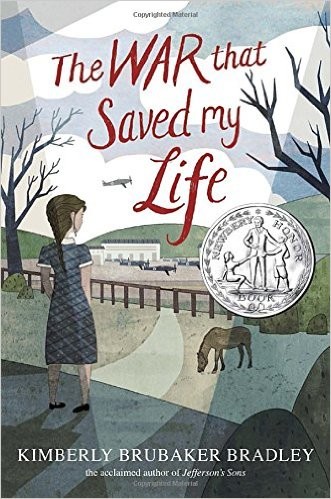
The War That Saved My Life
Kimberly Brubaker Bradley (2015)
“For one girl trapped in a London flat by her own mother, World War II is not a catastrophe — it is an escape.”
The War That Saved My Life— Summary & Analysis
by Kimberly Brubaker Bradley · published 2015 · 316 pages · Contemporary
A user-friendly study guide for The War That Saved My Life by Kimberly Brubaker Bradley (2015): a high-level plot summary, full chapter-by-chapter analysis, theme breakdowns, character profiles, and 30 essay questions designed for middle-school readers. Unlike a stock summary, sumsumsum.com adds a diction analysis drawn from Kimberly Brubaker Bradley’s actual text, and reading-difficulty guidance (Easy, 1/10) so students, teachers, and lifelong readers know what they are walking into.
“For one girl trapped in a London flat by her own mother, World War II is not a catastrophe — it is an escape.”
Short Summary
Ada Smith has spent her entire life locked in a one-room apartment in London by her mother, who is ashamed of Ada's clubfoot. When World War II begins and children are evacuated from the city, Ada escapes with her younger brother Jamie to the English countryside, where they are billeted with Susan Smith, a grieving, reclusive woman. For Ada, the war is not a disaster but a liberation — her first taste of fresh air, horseback riding, and the radical idea that she might be worth something. But the war will end, and Mam will want her children back.
Detailed Summary
Ada Smith is ten years old and has never left her family's one-room London flat. Her mother — called Mam — keeps Ada hidden because of her clubfoot, a congenital condition that makes her right foot twisted inward. Mam considers Ada's foot a source of shame, a deformity that reflects badly on the fam...
Summary in the Author’s Writing Style
A retelling of The War That Saved My Life in Kimberly Brubaker Bradley’s style — so you can hear the language, not just the plot. This is a stylistic pastiche written by sumsumsum, not an excerpt from the book.
I was ten years old, and I had never been outside. Mam kept me in the one room. She said my foot was ugly, and that I was ugly because of it, and that nobody wanted to see a girl like me. My right foot turned in. It had always turned in. I watched the street from the window and I minded Jamie, who w…
Chapter-by-Chapter Analysis
If you liked The War That Saved My Life, read next
Start with Number the Stars by Lois Lowry — Another WWII middle-grade novel about childhood courage — Lowry's protagonist fights external enemies while Ada fights internal ones. Then try The One and Only Ivan by Katherine Applegate — Both tell stories of liberation from captivity through spare, first-person narration — Ivan's cage is a mall, Ada's is a flat. Or pivot to Inside Out & Back Again by Thanhha Lai — Both feature displaced children learning to navigate unfamiliar worlds — Ha as a refugee, Ada as an evacuee.