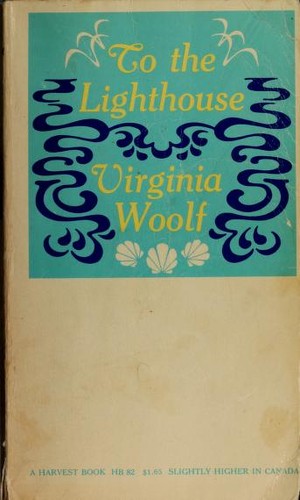
At a Glance
On a Scottish island before WWI, the Ramsay family and their guests plan a trip to the lighthouse — postponed by bad weather, promised to young James, refused by his father. Ten years pass; Mrs. Ramsay dies, a son dies in war, a daughter dies in childbirth. The survivors make the trip. Meanwhile, the painter Lily Briscoe finally completes the canvas she could not finish before — a painting that is also an act of mourning and a theory of art.
Read full summary →Why This Book Matters
To the Lighthouse is one of the foundational texts of English-language modernism — a novel that proved stream-of-consciousness could be used not for psychological experiment alone but for the deepest questions of art, time, grief, and gender. Its influence on the novel form is comparable to Joyce's Ulysses but more teachable: it has a structure, a emotional arc, and a resolution. It appears on virtually every college syllabus in English-speaking countries and is considered the defining text of Woolf's achievement.
Diction Profile
Elevated prose poetry with deep interior diction — the vocabulary of thought, sensation, and time rather than event
Extremely high