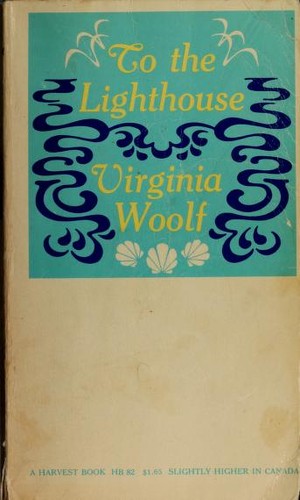
Why This Book Matters
To the Lighthouse is one of the foundational texts of English-language modernism — a novel that proved stream-of-consciousness could be used not for psychological experiment alone but for the deepest questions of art, time, grief, and gender. Its influence on the novel form is comparable to Joyce's Ulysses but more teachable: it has a structure, a emotional arc, and a resolution. It appears on virtually every college syllabus in English-speaking countries and is considered the defining text of Woolf's achievement.
Firsts & Innovations
First major novel to render grief as a structural principle rather than a narrative event — the deaths happen between the pages, not on them
First sustained use of the bracket/parenthetical as a formal device for registering death within the flow of time
One of the earliest serious portraits of a woman artist (Lily Briscoe) as a philosophical center of a novel, not a romantic subplot
Pioneered the use of impersonal, meteorological prose in 'Time Passes' as a way of rendering the passage of time without human consciousness
Cultural Impact
Designated by the Modern Library as one of the 100 best English-language novels of the 20th century
Profoundly influenced subsequent female modernist fiction — from Toni Morrison's temporal disruptions to Kazuo Ishiguro's elegiac narrators
The brackets in 'Time Passes' became a touchstone for literary theory about absence, death, and the limits of narration
Woolf's portrait of Leslie Stephen as Mr. Ramsay changed how literary biography understood the relationship between artists and their difficult fathers
Taught alongside Mrs. Dalloway in virtually all college-level modernism courses as the fullest statement of Woolf's technique and themes
Banned & Challenged
Not formally banned, though Woolf's work was dismissed by male contemporaries as 'feminine' and 'minor' during her lifetime. F.R. Leavis excluded her from his canonical 'Great Tradition' in 1948. Second-wave feminism reclaimed her in the 1970s; her critical reputation has been in ascent since. The novel is occasionally challenged in high school contexts for being 'too difficult' or 'without plot' — challenges that inadvertently prove one of its central arguments.