This page prints on a single page. Use Ctrl+P / Cmd+P.
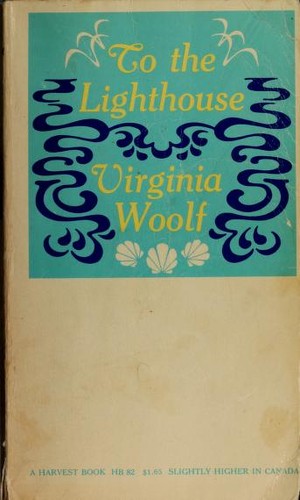
To the Lighthouse
Virginia Woolf (1927) · 209pages · Modernist · 11 AP appearances
Summary
On a Scottish island before WWI, the Ramsay family and their guests plan a trip to the lighthouse — postponed by bad weather, promised to young James, refused by his father. Ten years pass; Mrs. Ramsay dies, a son dies in war, a daughter dies in childbirth. The survivors make the trip. Meanwhile, the painter Lily Briscoe finally completes the canvas she could not finish before — a painting that is also an act of mourning and a theory of art.
Why It Matters
To the Lighthouse is one of the foundational texts of English-language modernism — a novel that proved stream-of-consciousness could be used not for psychological experiment alone but for the deepest questions of art, time, grief, and gender. Its influence on the novel form is comparable to Joyce...
Themes & Motifs
Diction & Style
Register: Elevated prose poetry with deep interior diction — the vocabulary of thought, sensation, and time rather than event
Narrator: Third-person limited, multiple focalization — the narration inhabits different minds in sequence, sometimes sliding b...
Figurative Language: Extremely high
Historical Context
Late Edwardian / post-WWI Britain (novel set c. 1910 and c. 1920): The novel is structured around WWI's gap: everything before is the world that believed in progress, duty, lighthouse trips. Everything after is the world that knows better. The ten-year pause in 'T...
Key Characters
Talking Points
- Woolf places the three deaths in Part Two inside square brackets — typographical parentheses. Why? What does this formal choice say about death's relationship to the passage of time?
- Mrs. Ramsay says 'nothing was simply one thing.' Is this the novel's thesis? How does the structure of the novel — its three parts, its multiple consciousness, its refusal of single meanings — enact this idea?
- Mr. Ramsay is a celebrated philosopher who studies human knowledge — and yet he cannot comfort his own children. What is Woolf saying about the relationship between intellectual achievement and emotional intelligence?
- Lily Briscoe's painting will 'be hung in the attics' or destroyed. She knows this. Why does she finish it anyway? What theory of art does Woolf embed in Lily's decision?
- Compare Mrs. Ramsay's creativity — her dinners, her matchmaking, her social arrangements — to Lily Briscoe's painting. Both are acts of composition. Why does one receive recognition and the other does not?
Notable Quotes
“Yes, of course, if it's fine tomorrow.”
“Women can't paint, women can't write.”
“Nothing was simply one thing.”
Why Read This
Because Woolf does something that sounds simple and turns out to be miraculous: she renders what it actually feels like to think. Not what people say, not what happens, but the movement of a mind through a single afternoon — the way a memory intru...