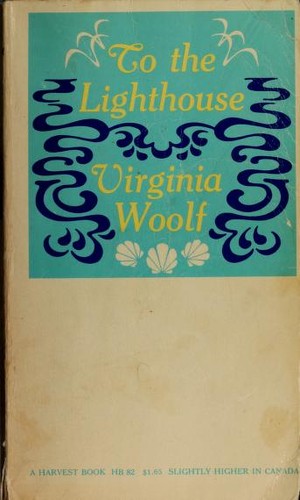
To the Lighthouse— Historical Context & Author Background
Author: Virginia Woolf · Published 1927· Era: Modernist·209 pages
Themes explored: time, art, loss, memory, gender, perception, family, creation
About Virginia Woolf
Virginia Woolf (1882–1941) was born Adeline Virginia Stephen, the third child of Leslie Stephen — eminent Victorian man of letters, editor of the Dictionary of National Biography, physically imposing, emotionally needy — and Julia Prinsep Stephen, a celebrated beauty and tireless carer of the sick and lonely who died in 1895 when Woolf was thirteen. Julia's death triggered Woolf's first mental breakdown. Leslie Stephen's death in 1904 triggered a second. To the Lighthouse, begun in 1925 and published in 1927, is Woolf's act of mourning and reconciliation with both parents — rendered into fiction without sentimentality. She said, after finishing it, that she no longer heard her mother's voice in her head. The novel had exorcised the ghost.
Life → Text Connections
How Virginia Woolf's real experiences shaped specific elements of To the Lighthouse.
Leslie Stephen was a prominent Victorian philosopher and intellectual who expected sustained emotional support from his daughters after his wife's death
Mr. Ramsay — his demands for sympathy, his philosophical work on human knowledge, his emotional storms, his genuine greatness and genuine cruelty
Woolf rendered her father with remarkable honesty: neither hagiography nor prosecution but a portrait of a man whose gifts and damages were inseparable.
Julia Stephen was renowned for her beauty and her social capacity — she organized the household around others' needs with apparent effortlessness
Mrs. Ramsay — the luminosity, the matchmaking, the dinners, the compulsion to give, the private self that exists only when alone
Julia Stephen died before Woolf could understand her as an adult. The novel is Woolf's attempt to see her mother fully, from the outside and the inside.
Woolf was never fully accepted as a serious artist in the male intellectual circles she inhabited — dismissal of women's creativity was routine
Lily Briscoe's 'women can't paint' and her lifelong struggle to complete a canvas in the face of social discouragement
Lily is not Woolf — but Lily's struggle is Woolf's translated into paint. Every moment of creative self-doubt in the novel carries autobiographical weight.
Woolf's brother Thoby Stephen died of typhoid in 1906, aged twenty-six; her own repeated breakdowns brought her into proximity with death and institutional medicine
The parenthetical deaths in 'Time Passes' — the bracket form capturing death as something the living can only absorb indirectly
The formal innovation of the brackets is not neutral: it is Woolf's aesthetic solution to the problem of writing about death when death is too large for direct narration.
Historical Era
Late Edwardian / post-WWI Britain (novel set c. 1910 and c. 1920)
How the Era Shapes the Book
The novel is structured around WWI's gap: everything before is the world that believed in progress, duty, lighthouse trips. Everything after is the world that knows better. The ten-year pause in 'Time Passes' is the war rendered as erasure — not described, because Woolf refuses to give it narrative dignity, but present as a void around which the survivors must now build new meaning.
Why To the Lighthouse Matters Historically
To the Lighthouse is one of the foundational texts of English-language modernism — a novel that proved stream-of-consciousness could be used not for psychological experiment alone but for the deepest questions of art, time, grief, and gender. Its influence on the novel form is comparable to Joyce's Ulysses but more teachable: it has a structure, a emotional arc, and a resolution. It appears on virtually every college syllabus in English-speaking countries and is considered the defining text of Woolf's achievement.
- First major novel to render grief as a structural principle rather than a narrative event — the deaths happen between the pages, not on them
- First sustained use of the bracket/parenthetical as a formal device for registering death within the flow of time
- One of the earliest serious portraits of a woman artist (Lily Briscoe) as a philosophical center of a novel, not a romantic subplot
- Pioneered the use of impersonal, meteorological prose in 'Time Passes' as a way of rendering the passage of time without human consciousness
Not formally banned, though Woolf's work was dismissed by male contemporaries as 'feminine' and 'minor' during her lifetime. F.R. Leavis excluded her from his canonical 'Great Tradition' in 1948. Second-wave feminism reclaimed her in the 1970s; her critical reputation has been in ascent since. The novel is occasionally challenged in high school contexts for being 'too difficult' or 'without plot' — challenges that inadvertently prove one of its central arguments.