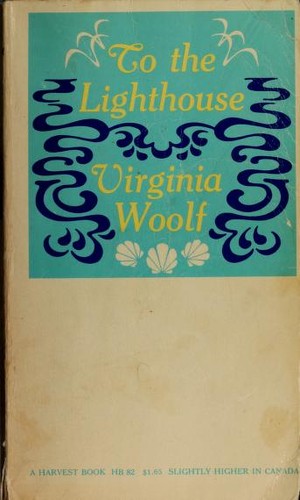
To the Lighthouse— Summary & Analysis
by Virginia Woolf · published 1927 · 209 pages · Modernist
A user-friendly study guide for To the Lighthouse by Virginia Woolf (1927): a high-level plot summary, full chapter-by-chapter analysis, theme breakdowns, character profiles, and 30 essay questions designed for ap-english, college, ib readers. Unlike a stock summary, sumsumsum.com adds a diction analysis drawn from Virginia Woolf’s actual text, the 11 documented AP Literature exam appearances of this book, and reading-difficulty guidance (Moderate, 4/10) so students, teachers, and lifelong readers know what they are walking into.
“A family, a lighthouse, a painting — and the decade of war and death that falls between the wanting and the doing.”
Short Summary
On a Scottish island before WWI, the Ramsay family and their guests plan a trip to the lighthouse — postponed by bad weather, promised to young James, refused by his father. Ten years pass; Mrs. Ramsay dies, a son dies in war, a daughter dies in childbirth. The survivors make the trip. Meanwhile, the painter Lily Briscoe finally completes the canvas she could not finish before — a painting that is also an act of mourning and a theory of art.
Detailed Summary
The novel unfolds in three movements, structured by time rather than plot. In Part One ('The Window'), the Ramsay family spends a late-summer evening on a Hebridean island with a houseful of guests. Six-year-old James Ramsay desperately wants to sail to the lighthouse the following morning. His moth...
Summary in the Author’s Writing Style
A retelling of To the Lighthouse in Virginia Woolf’s style — so you can hear the language, not just the plot. This is a stylistic pastiche written by sumsumsum, not an excerpt from the book.
Yes, of course, if it were fine tomorrow, she said, and to her son the words conferred a whole expedition, the long blue voyage of the morning already begun, so that the lighthouse stood waxed and miraculous across the bay; and then his father, passing the window, said it would not be fine, with tha…
Chapter-by-Chapter Analysis
If you liked To the Lighthouse, read next
Start with Atonement by Ian McEwan — Another novel about the act of writing as a response to loss and guilt, asking whether fiction can repair what reality destroys. Or pivot to Never Let Me Go by Kazuo Ishiguro — Woolf's elegiac mode extended into a different key — Ishiguro's narrators, like Woolf's, circle their losses without being able to directly face them.
For comparative essays, pair To the Lighthouse with
The strongest comparative pairing is The Sound and the Fury (William Faulkner) — Contemporaneous American experiment in shattered consciousness and family grief — Faulkner fragments where Woolf lyricizes, but both ask what survives the destruction of a household. For a third angle, contrast with Beloved (Toni Morrison) — Another novel in which the dead refuse to stay bracketed — Morrison's ghost is literal where Woolf's is psychological, but both ask what we owe the dead.
Each of these pairings opens a clean thesis path on shared themes, period diction, or formal influence — useful for AP Lit / IB / first-year college comparative essays.
More from Virginia Woolf and the scholars who study Woolf
Other works by Virginia Woolf: A Room of One's Own (1929, 172 pages), Mrs. Dalloway (1925, 194 pages). Reading two or three of these in sequence reveals Virginia Woolf’s recurring obsessions and stylistic signatures more clearly than any single book can.
The standard scholarly entry points to Virginia Woolf’s work: Hermione Lee (Oxford, Wolfson College President Emerita) — Virginia Woolf (1996); Quentin Bell (Sussex, Woolf's nephew) — Virginia Woolf: A Biography (1972). These are the works graduate seminars cite when teaching Virginia Woolf.