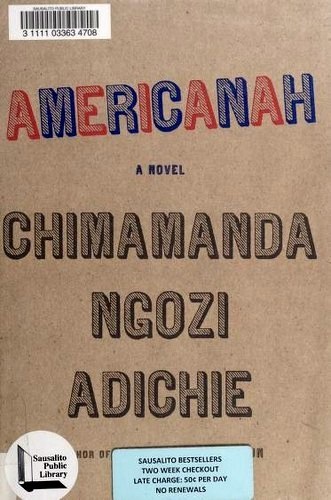
Americanah
Chimamanda Ngozi Adichie (2013)
“A Nigerian woman moves to America and discovers that race is not something you are born with — it is something America assigns to you.”
Why This Book Matters
Won the National Book Critics Circle Award for Fiction in 2013. One of the most significant novels about race in America written in the 21st century — and the one with the most unusual authority: a non-American Black woman who can see American race from outside the categories Americans take for granted. Often taught alongside Ta-Nehisi Coates's Between the World and Me as complementary perspectives on American Blackness.
Firsts & Innovations
First major literary novel to use a blog-within-novel device as a primary thematic and structural element
One of the first widely-taught novels to explicitly distinguish between African-American and Non-American Black experience as different historical phenomena
Brought the concept of 'code-switching' — previously a sociolinguistic term — into mainstream literary and cultural discussion
Cultural Impact
The term 'Americanah' entered English usage as a way to describe any immigrant who returns home with an affected relationship to their home culture
Ifemelu's blog posts circulate as standalone essays on race, often without attribution to the novel
Adichie's TED talk 'We Should All Be Feminists' (2013, the same year as Americanah) became the most-downloaded TED talk — Americanah and the talk together established Adichie as the defining public intellectual voice on gender and race in the 2010s
The novel's treatment of Black hair helped catalyze mainstream discussion of natural hair politics
Television adaptation announced (with Lupita Nyong'o as Ifemelu); fueled another wave of readership
Banned & Challenged
Challenged in several Texas school districts for sexual content and for what critics called 'divisive' treatment of race — a charge that rather proves the novel's point about American discomfort with direct racial discourse.