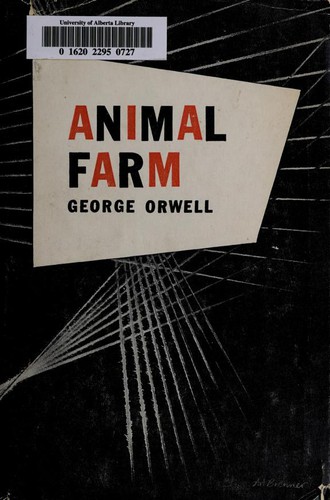
Animal Farm
George Orwell (1945)
“A fairy tale for adults: seven commandments, one pig, and the most efficient political horror story ever written at 112 pages.”
For Students
Because it is 112 pages that contain more political insight than most 600-page history books. Because every generation encounters a new situation where the Commandments are being rewritten and Squealer is explaining why that's actually fine. Because reading Boxer's death should make you angry, and knowing why it makes you angry is the beginning of political literacy. And because you can finish it in two hours and spend the rest of your life thinking about it.
For Teachers
The allegorical structure is transparent enough for middle schoolers and deep enough for AP seminars. The historical allegory rewards research while the text functions without it. The language is so deliberately simple that close reading becomes an exercise in how much plain language can contain — each sentence does structural and allegorical work simultaneously. The seven commandments and their amendments give students a visible, trackable pattern of corruption to trace. The novel teaches political language the same way a laboratory teaches chemistry: in the smallest possible controlled environment.
Why It Still Matters
Animal Farm is not about the Soviet Union. It is about what happens when power is not distributed, when history is controlled by the powerful, when language is weaponized, and when ordinary people accept the official account because the alternative is too frightening to face. This has happened in every era. It is happening now, somewhere. The specific farm is always different. The pigs always sound the same.