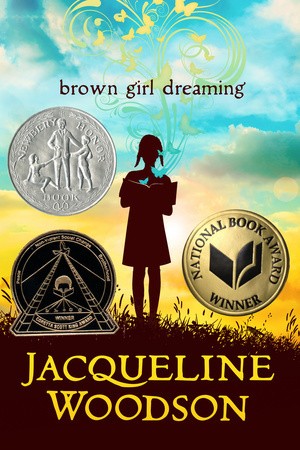
Brown Girl Dreaming
Jacqueline Woodson (2014)
“A childhood lived across the civil rights era, told in poems so precise they feel like memory itself — and a love letter to the power of words when the world refuses to hear you.”
Why This Book Matters
Brown Girl Dreaming won the 2014 National Book Award for Young People's Literature and multiple Newbery Honor citations. It is one of the most decorated books in contemporary children's and young adult literature, and one of the first verse memoirs to reach a mainstream youth audience at the level of a major award. It reshaped what was considered possible for middle-grade memoir: showing that a Black girl's childhood was worthy of the highest formal ambition and the most prestigious literary recognition.
Firsts & Innovations
One of the first verse memoirs for young people to win a major award (National Book Award, 2014)
Demonstrated that spare free verse — not prose — could be the natural form for a young adult memoir
One of the first major award winners to center the civil rights era from a child's interior perspective rather than as historical lesson
Cultural Impact
Widely adopted in middle school and high school curricula as a central text for studying memoir, poetry, civil rights, and identity
One of the most frequently assigned books in American middle schools alongside To Kill a Mockingbird and The Outsiders
Sparked a wave of verse memoirs for young people, changing what the form was considered capable of
Woodson became National Ambassador for Young People's Literature (2015-2017) partly on the basis of this book
One of the most frequently challenged books in school libraries — for its honest treatment of race, religion, and family complexity
Banned & Challenged
Frequently challenged and sometimes removed from school libraries for its treatment of race, its portrayal of the civil rights movement, and its honest representation of religious practice (Jehovah's Witness). Some challenges have come from communities that object to any curriculum that addresses race directly; others have come from religious communities objecting to the representation of faith. The challenges demonstrate the book's continued relevance: it is still capable of disturbing people who prefer not to be disturbed.