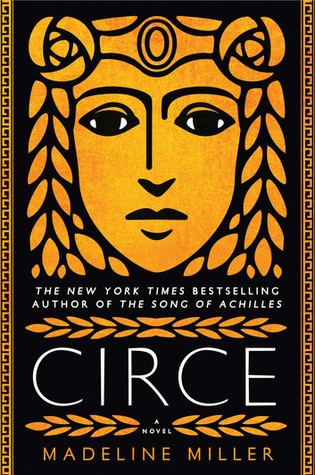
Circe
Madeline Miller (2018)
“The 'witch' of The Odyssey finally speaks — and her story turns out to be about what it costs to become yourself.”
This page prints on a single page. Use Ctrl+P / Cmd+P.
Circe
Madeline Miller (2018) · 393pages · Contemporary / Mythic Retelling · 3 AP appearances
Summary
Circe, daughter of the sun god Helios, discovers she possesses the power of witchcraft — a mortal-born magic foreign to her divine family. Exiled to the island of Aiaia, she hones her craft through centuries of isolation, encounters heroes and monsters, suffers assault and grief, and ultimately must choose between immortality and a human life. Miller retells the story of a notorious 'villain' of Greek myth as a woman's long, painful journey toward self-possession.
Why It Matters
Circe spent more than a year on the New York Times bestseller list and has sold millions of copies worldwide. It represents the mainstreaming of feminist mythological retelling as a literary form — not a niche academic project but a genuine commercial and critical phenomenon. The novel showed tha...
Themes & Motifs
Diction & Style
Register: Elevated but accessible — mythic cadence without classical distance; first-person psychological intimacy married to epic subject matter
Narrator: Circe as retrospective first-person narrator: she is telling us what she knows now about what she didn't understand t...
Figurative Language: High but controlled
Historical Context
Ancient Greek mythology — primarily Homeric period, set in the same narrative world as the Iliad and Odyssey; published 2018: Circe was published into a cultural moment specifically receptive to its project: the question 'what was she actually experiencing?' applied to a mythological figure who had been famous for centuri...
Key Characters
Talking Points
- Miller opens with 'When I was born, the name for what I was did not exist.' Why is language — the absence of a word — Circe's first problem? What does naming have to do with power?
- Circe's transformation of Scylla is the act that exiles her — and the act that defines her in mythology for centuries. Is it a villainous act? Use the novel's own ethical framework to evaluate it.
- The novel presents pharmaka as labor — something learned through failure, practice, and attention — rather than as an innate gift. Why does this distinction matter for the novel's argument about power and gender?
- How does the novel use the relationship between Circe and Penelope to challenge the 'good woman vs. bad woman' binary that the original mythology imposed on both of them?
- Odysseus is the most famous hero of Greek mythology, and in this novel he is... thoroughly human. How does Miller characterize him, and what does her characterization argue about the nature of heroism?
Notable Quotes
“When I was born, the name for what I was did not exist.”
“I will not be like a bird bred in a cage, I thought, too dull to fly even when the door is open.”
“Not every god need be the same. It is a thought I had not considered before.”
Why Read This
Because every story you've been told about dangerous women was told by someone who found them dangerous for a reason. Circe asks you to sit inside that danger and understand it from within. It's also one of the most precisely written novels about ...